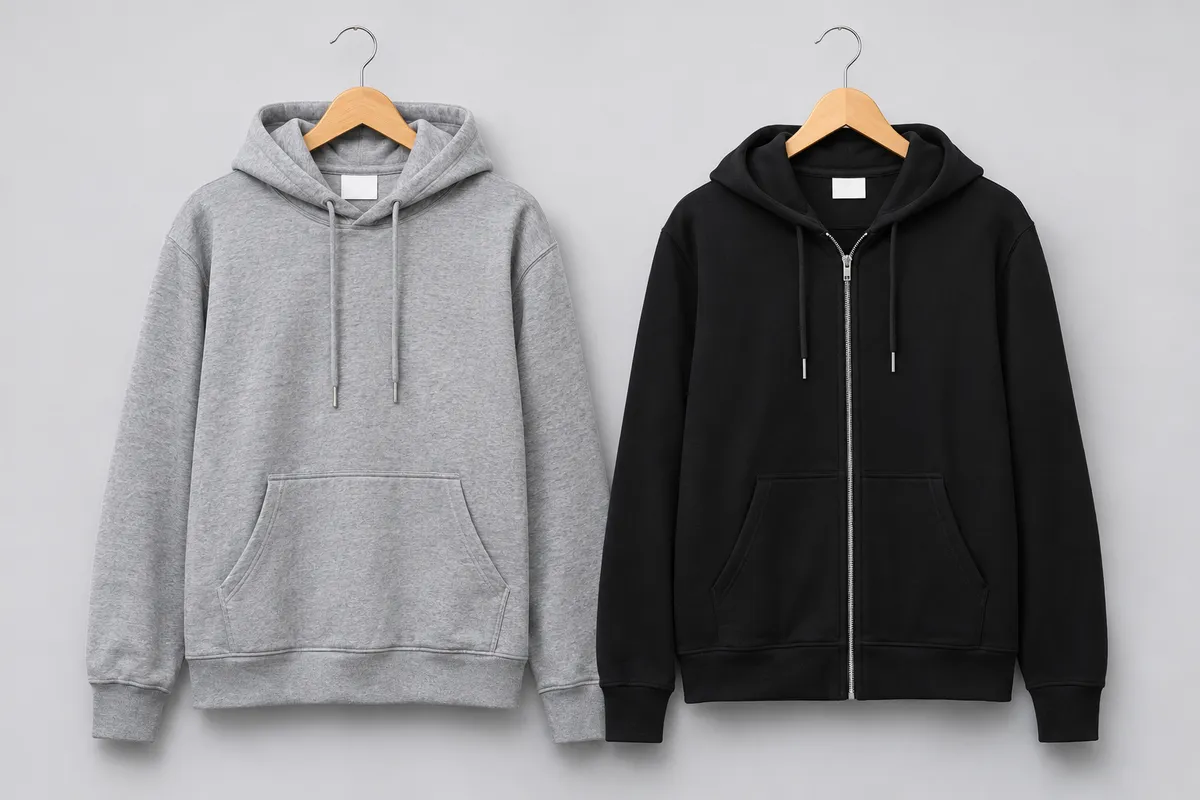
Planning summer and winter uniform sets together means deciding which garments are worn all year, which are added for cold weather and which replace others in the heat, and then ordering each group on its own timetable. The simplest plans keep one core of shared pieces, such as trousers, skirts and PE shorts, and add a short list of seasonal garments on top.
That answers a question many families also ask: which school clothes suit various weather conditions? Light short-sleeve tops and summer dresses suit warm weather; long sleeves, knitwear, sweatshirts, blazers and tracksuits suit cold or wet weather. For a buyer, the work is turning that into two coordinated orders.
Which garments belong in each set?
Start by sorting every item on the uniform list into three groups. The table is an example layout; each school’s list will differ.
| Group | Typical garments | When it is worn |
|---|---|---|
| All-year core | Trousers, skirts or skorts, pinafores, PE shorts, PE T-shirts | Every term |
| Summer additions or swaps | Short-sleeve shirts or polos, summer dresses, school shorts | Warm terms only |
| Winter additions or swaps | Long-sleeve shirts or polos, knitted jumpers or cardigans, sweatshirts, blazers, tracksuits, fleece jackets | Cool or wet terms |
The all-year core is ordered steadily and topped up through the year. Seasonal additions are ordered once, ahead of the season, with a smaller top-up when sizes run short. Keeping that distinction clear stops a shop from holding winter stock through the hot months, or running out of summer dresses just as the weather turns.
How should the two sets relate to each other?
A student will wear pieces from both sets in the weeks between seasons, so they need to look right together. Three checks help:
- Colour. A navy sweatshirt and a navy summer dress made from different fabrics can read as two shades. Ask for colour matching across fabrics and approve swatches side by side.
- Logo. Decide whether the logo is the same size and position on the summer polo and the winter sweatshirt. Logo embroidery or printing is available on both, confirmed on the sample.
- Sizing. If a jumper is worn over a long-sleeve shirt, the size charts should allow for it. Agree one size chart format across both sets.
When to order each set
Lead time is confirmed in the quotation, so plan backwards from the date each season starts, not from the start of the school year. A school whose year begins in a warm month needs its summer pieces first, and its winter pieces some months later.
- List the season start dates for the schools you serve.
- Count back from each date, leaving room for the sample, approval, production, quality check and shipping.
- Place the seasonal order in one go, with a planned top-up for the most-sold sizes.
- Keep the all-year core on a rolling cycle, reordered from the same approved sample.
For shops serving schools in several countries, the seasons may not line up. A school in the northern hemisphere and one in the southern hemisphere can need winter knitwear at opposite ends of the calendar.
What we need to quote both sets
The minimum is 50 pieces per style for woven garments and 100 per style for knitwear and sportswear, with sizes mixed within a style. Because summer and winter garments are separate styles, each meets its own minimum. You can request both sets in one enquiry, and we quote each style by fabric, quantity and branding.
Send us:
- The full uniform list, marked core, summer or winter
- Colour references for each garment
- Logo artwork and preferred method for each piece
- Your size range and a rough quantity per style
- The start date of each season you are ordering for
Our how to order page sets out each step from enquiry to dispatch, and the summer dresses and knitted jumpers and cardigans pages show two of the most common seasonal styles.
When you have the list sorted into core, summer and winter pieces, send it to us with your season dates and we will quote both sets together.
Questions buyers ask
Should summer and winter uniforms be ordered at the same time?
They can be quoted together, but they are often produced and shipped at different times. Ordering each set ahead of its own season keeps money out of stock that will not sell for months, while one quotation keeps colours and logos consistent.
Can the same trousers be worn in summer and winter?
Many schools keep one pair of trousers all year and swap only the tops. Others add school shorts for warm terms. Where trousers are shared, they belong in the all-year core and are reordered on a rolling basis rather than seasonally.
Do winter garments need bigger sizes than summer ones?
Outer layers such as jumpers, sweatshirts and blazers are worn over a shirt or polo, so their size chart should allow room for that layer. The student’s size label stays the same; the garment measurements carry the extra ease.