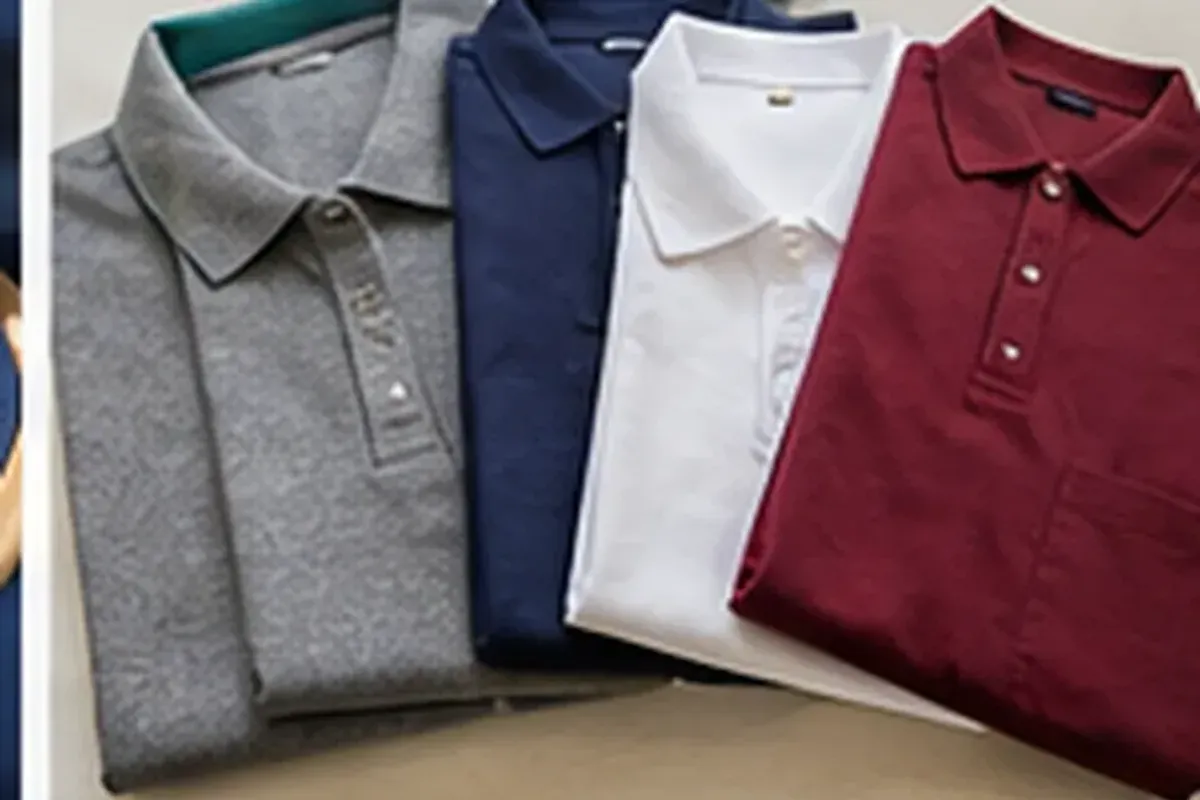
An online school uniform shop needs the same garments as a high-street shop, sourced with four extra things in mind: size charts precise enough for families to buy without trying on, garments that look exactly like their photographs, packing ready to post, and stock deep enough to meet the delivery dates shown on the website. Each of these is set at the sourcing stage, not after the goods arrive.
Online, the garment cannot be touched before purchase. Every gap between what the page says and what arrives becomes a return.
What does an online shop need that a counter shop does not?
| Need | Why it matters online | What to ask the maker for |
|---|---|---|
| Precise measurements by size | Families choose a size from a chart | A size chart agreed with the sample, with measurements per size |
| Consistency between orders | Photos stay on the site for years | Reorders made to the approved sample |
| Ready-to-post packing | Saves handling in your dispatch area | Single-piece polybags with size stickers |
| Clear size marking | Pickers must find the right item fast | Size on the label and the polybag |
| Accurate colour | Screens already vary; the garment must not | Colour matched to an approved reference |
A counter shop can fix a size problem with a quick fitting. An online shop pays postage both ways.
How do size charts affect online sourcing?
The size chart is the online shop’s fitting room. Build it from the garments, not from a generic table.
- Measure the approved sample in every size, or ask for measurements for each size with the sample.
- Publish garment measurements such as chest width, length and waist, plus a guide to which ages they suit.
- Keep the chart per style. A sweatshirt and a shirt in the same age size are cut differently.
- Check each delivery against the chart by measuring a few pieces per size.
- Update the chart if a deliberate change is made to a style, and note the date.
Returns data tells you whether the chart works. If one style is returned for “too small” far more than others, its chart or its sizing needs a look.
Photographs and product details
Photograph the garments you will actually sell. Ideally, shoot the approved sample or the first bulk pieces, not a pre-production prototype that may differ in small ways. Note the fabric and care details from the label, and describe features families ask about: collar type, pocket, fastening, logo position.
Because reorders of a style are made to the approved sample, the photographs stay accurate season after season. If you change a fabric or detail, reshoot.
How deep should an online shop’s stock be?
Online shops promise a delivery time, so an out-of-stock size costs more than on the high street: the order is lost or delayed and the family may not return.
- Hold deeper stock in core sizes of everyday garments such as shirts and blouses, polo shirts and sweatshirts.
- Show stock levels honestly on the site, and switch a size to pre-order when it runs out.
- Plan a top-up before the peak ends, because online sales often continue later than counter sales.
- Use sizes mixed within a style to reorder only the sizes you need. The minimum is 50 pieces per style for woven garments and 100 for knitwear and sportswear.
Packing for an online dispatch area
Agree packing before ordering, so stock goes straight from carton to shelf to parcel.
- Each garment in its own polybag
- Size sticker on the polybag, matching the label
- Your style code on the sticker, if you want it
- Cartons packed by style and size, with a contents list
- Carton labels that show style and size from the outside
Packing details are confirmed at quotation. Our page for uniform shops and retailers covers packing for the shop floor and stockroom. If you run an online uniform shop, send us your style list and packing instructions, and we will quote each style ready for your dispatch area.
Questions buyers ask
Do online uniform shops have more returns than counter shops?
They usually do, mainly for fit, because families cannot try garments on. Precise size charts based on real garment measurements, and consistent sizing between orders, are the main ways to reduce them.
Can an online shop sell several schools’ uniforms from one range?
Yes. Shared plain items serve all schools, and each school’s branded items sit on their own page. Sourcing works the same way as for a shop with a counter: branded styles per school, plain styles shared.
Should an online shop photograph every colour and size?
Every colour, yes, because families judge shades by eye. Every size is not needed; a clear size chart does that job. Photograph one size per colour, flat and on a model or mannequin.