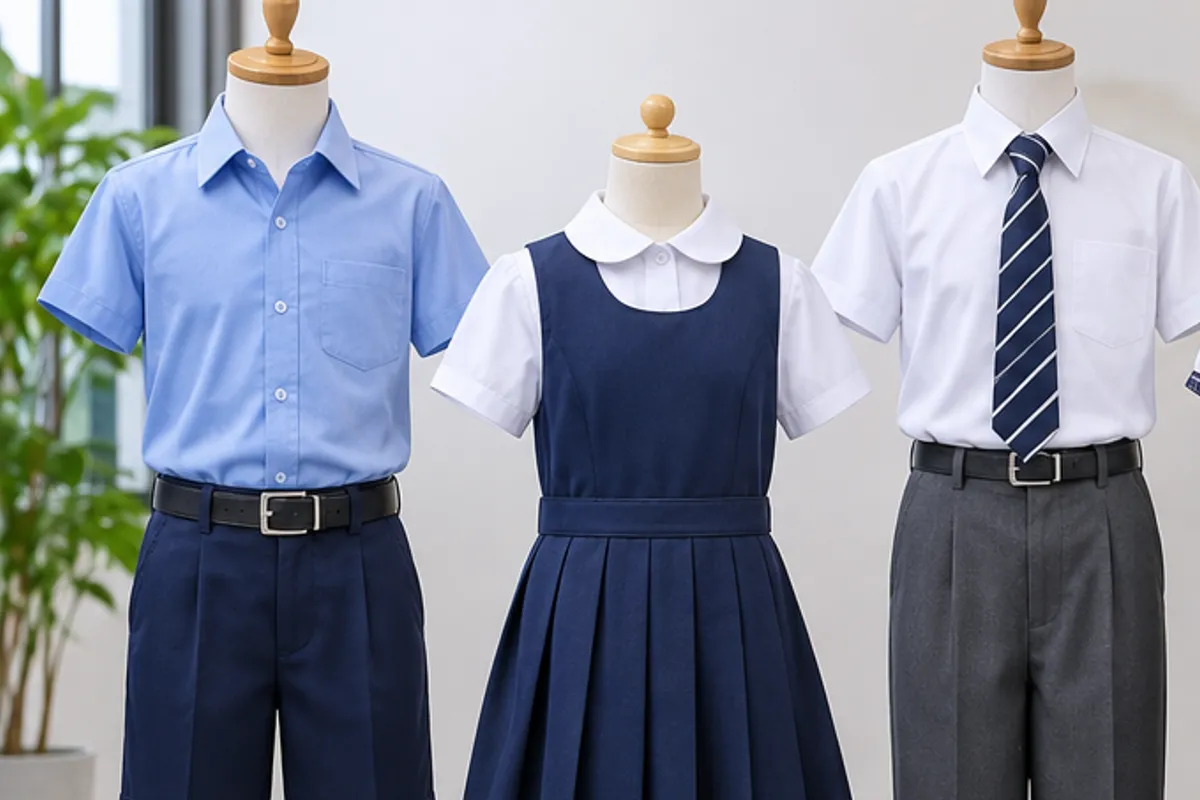
Slim fit school trouser sizes normally begin at an older age band than the regular fit and finish at a smaller senior waist, because slim fit is bought mainly by older, slimmer students. Plan the slim run as a narrower band sitting inside the regular range, so every student still has a size to fall back on in the regular fit.
The question is less about the slim cut itself and more about how its size run fits around the regular one without doubling your stock.
Where the slim run starts and stops
Our slim fit trousers run from age 7–8 to 15–16, then by waist size for seniors. The regular fit starts earlier, at age 3–4. These are planning examples, and the size range for each order is agreed with you.
In practice, buyers trim the slim run further at both ends:
- Lower end. Demand for slim fit in ages 7–8 and 9–10 is often small. Many shops start the slim run at 11–12 and add the younger bands only if families ask.
- Upper end. Students with larger waists tend to choose the regular fit for comfort. The slim run can stop a waist size or two before the regular run does.
- Leg lengths. Slim fit is often worn slightly shorter at the hem, but taller seniors still want a long leg. A regular and long leg in the middle waists covers most requests.
Side-by-side size run: an example
The table shows how one buyer might set the two runs against each other for a first order. Treat it as a starting example and adjust it to your own sales or roll data.
| Size | Regular fit | Slim fit |
|---|---|---|
| Age 3–4 to 5–6 | Stock | Not offered |
| Age 7–8 to 9–10 | Stock | Skip, or carry lightly |
| Age 11–12 to 13–14 | Stock | Stock lightly |
| Age 15–16 | Stock | Stock |
| Smaller senior waists | Stock | Stock, regular and long leg |
| Middle senior waists | Stock deeply | Stock, regular and long leg |
| Larger senior waists | Stock | Skip at first |
The regular fit is the safety net. Every student can find a size in it, so the slim run only needs to cover the sizes where it actually sells.
How do you split one order between slim and regular?
Slim and regular are separate styles, and each needs to reach the minimum of 50 pieces, with sizes mixed within it. That shapes the split.
- Fix the regular order first, sized for the whole range, because it carries the most pairs.
- Estimate how many senior students want a slim cut. If you have sales data, use it. If not, ask the school or look at what students wear now.
- Move that share out of the regular fit in the matching sizes, rather than adding it on top. This stops double counting.
- Check the slim total reaches the minimum. If it does not, narrow the slim run to fewer sizes rather than padding it.
Buyers who sell to several schools can often combine slim demand across them, as long as the colour and fabric are the same.
Tickets and shelves for two fits
Slim and regular pairs in the same waist size look alike on a shelf, especially in black or grey. Clear labelling avoids mix-ups at the counter and in returns.
- Put “Slim” or “Regular” on the waistband label as well as the swing ticket
- Use a different ticket colour or shelf strip for each fit
- Keep a fitting pair of each fit in the most common senior waist
- Record exchanges between fits, not just between sizes
The exchange record is useful. If many students swap from slim to regular in one waist size, the slim chart may be too tight there, or the slim run may go one size too far.
Agreeing the slim chart
The slim fit needs its own size chart. The waist and seat may be close to the regular fit, but the thigh, knee and leg opening are smaller, and those columns decide whether students feel the cut is right. Check the sample in at least two waist sizes before production. Our size charts page explains how starting measurements are set for each order.
Both fits are shown on our school trousers and shorts page. Send us the sizes you plan for each fit, and we will quote them as two styles.
Questions buyers ask
Do younger students ever need slim fit trousers?
Some do, particularly very slim children who find the regular fit loose. An adjustable or elastic-back waist in the regular fit often solves this more cheaply than adding young slim sizes. Offer young slim sizes only if requests are steady.
Should slim fit trousers come in the same colours as regular fit?
Keep them in the colours where you sell the most senior trousers, usually grey or black. Adding a slim fit in every colour spreads stock thin and may leave each colour short of the minimum.
How can staff tell a family which fit to choose?
Ask the student to try both in the same waist size. If the regular fit gathers at the waist or flaps at the leg, slim fit may suit; if the slim fit pulls across the thigh, regular is the better choice.