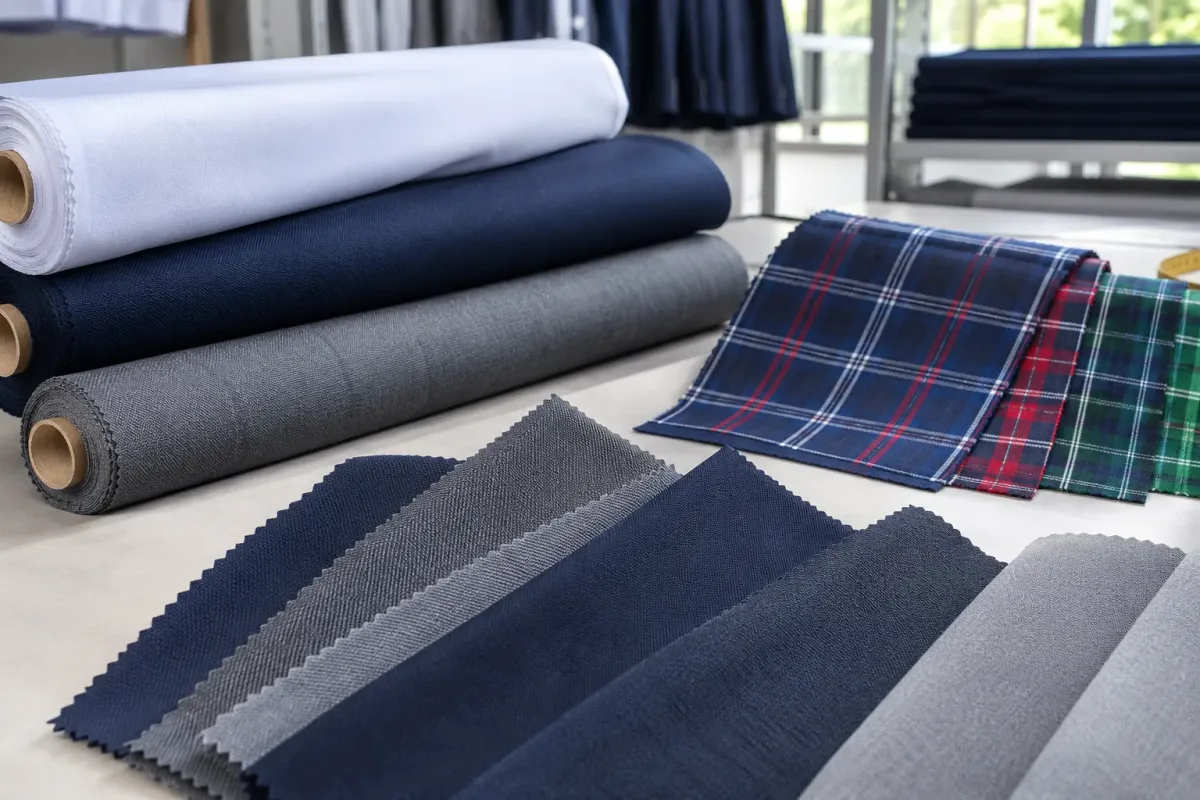
School uniform colours for hot weather work well when the top half is pale and the lower half is mid-tone: white, sky blue or pale yellow shirts and polos above grey, navy or khaki shorts, skirts and trousers. Pale colours reflect more sunlight and feel cooler, while mid-tone lower garments hide the dust and sweat marks that pale ones show.
In hot climates, colour and fabric work together. A cool colour in a heavy fabric is still uncomfortable, and a light fabric in a very dark colour can still feel warm in direct sun.
How does colour affect heat?
Dark colours absorb more sunlight than pale ones, so a black or dark navy garment in direct sun warms up faster than a white one. In shade or indoors, the difference is much smaller. That is why the colour of garments worn outside at break, during assemblies or on the walk to school matters most.
Strong sun also fades colour over time. Bright and dark shades lose depth faster when they are worn and dried in strong sunlight, and the change shows most on shoulders and upper backs.
Matching colours to garments in warm climates
| Garment | Suggested colours | Why | Fabric to consider |
|---|---|---|---|
| Shirt or blouse | White, sky blue, pale yellow | Reflects sun, looks fresh | Poly-cotton poplin |
| Polo shirt | White, sky blue, pale school colour | Cool on the body, light to wash | Poly-cotton piqué |
| Summer dress | Mid-tone gingham or stripe | Pale enough to feel cool, patterned to hide marks | Poly-cotton gingham and stripe |
| Shorts and trousers | Grey, navy, khaki | Hide dust and sitting marks | Poly-viscose or polyester twill |
| Skirt or skort | Grey, navy, a check | As above; pleats show marks less in mid-tones | Poly-viscose or polyester twill |
| Light layer for cooler mornings | School colour, mid-tone | Carries identity without much heat | Poly-cotton fleece sweatshirt |
Where a blazer or jumper is not needed for most of the year, the polo or shirt becomes the main identity garment. In that case, consider a polo in a pale version of the school colour rather than white, so the school is still recognisable.
Keeping pale colours clean
Pale tops show sweat at the collar and underarms, and dust from dry playgrounds. A few choices reduce the problem:
- Choose pale tints rather than pure white for polos and shirts worn every day. Sky blue and pale grey hide more than white.
- Use a darker lower garment so seat and knee marks stay hidden.
- Pick patterns for dresses. A gingham or stripe disguises marks that a plain pale dress would show.
- Ask shops to stock spares. In hot climates, families tend to need more shirts and polos per pupil because they are washed daily.
Fabric choices for heat and colour
Our shirts and blouses come in poly-cotton poplin and Oxford, and our polo shirts in poly-cotton or polyester piqué. Poly-cotton blends feel cooler on the skin than heavier fabrics, while polyester holds colour well through frequent washing and drying in the sun. The fabric for each style is confirmed at quotation.
For lower garments, poly-viscose has a softer handle and polyester twill is hard-wearing. Both hold mid-tone colours well. See our page on fabrics and colour matching for the options by garment.
A note on dark school colours
Many schools in warm countries still have dark main colours, such as maroon, navy or bottle green. You do not need to change them. Keep the dark colour for the garments worn least in direct sun, such as a light sweatshirt for cooler mornings, and use paler tints or white for daily shirts and school polo shirts.
When you are ready, send us your garment list and colour references. We will quote every style by fabric, quantity and branding, with samples for colour approval.
Questions buyers ask
Is white the coolest colour for a school uniform shirt?
White reflects the most sunlight, so it feels cooler in direct sun. Sky blue and other pale tints are only slightly warmer and hide sweat and dust marks far better, which can make them a more practical everyday choice in hot climates.
Do dark uniform colours fade faster in hot countries?
Strong sun can fade any dyed fabric over time, and the change is most visible on bright and dark shades. Drying garments in shade and turning them inside out helps. Advise families to follow the care label on every garment.
Should a hot-climate school drop its jumper or blazer?
That is the school’s decision. Many keep a light sweatshirt or cardigan for cooler mornings and air-conditioned rooms, and reserve a blazer for formal occasions. Fewer warm layers means the polo or shirt colour carries more of the school’s identity.