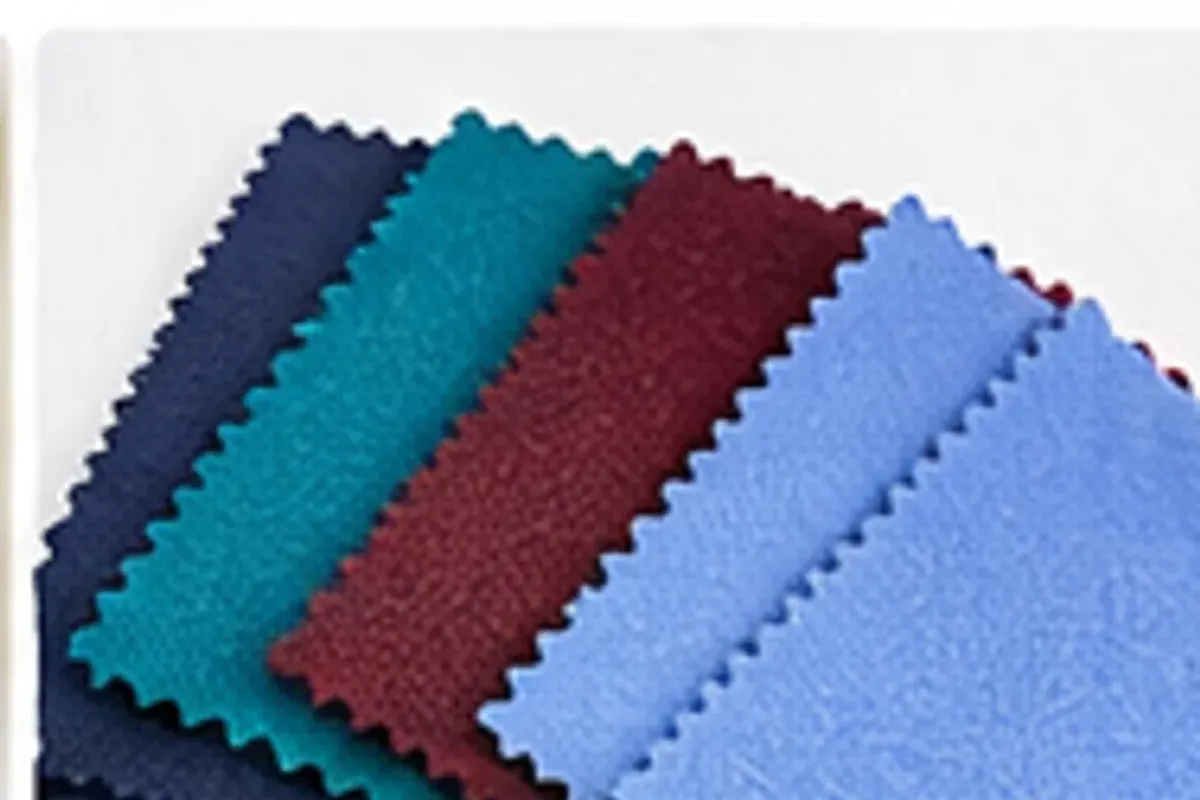
A school sweatshirt lasts or fails on three things: the weight of the fleece, the quality of the ribbed cuffs and hem, and how the seams are finished. Our sweatshirts are made in poly-cotton fleece, and the weight and handle are set on the sample you approve, so the sample is where you judge all three.
This post explains what to look for in school sweatshirt fleece and construction, and how to compare a sample against the garment you sell now.
Why poly-cotton fleece
Sweatshirt fleece is a knitted fabric with a smooth outer face and a softer inner face. In a poly-cotton blend, the cotton gives a familiar soft feel and the polyester helps the garment keep its shape and colour through frequent washing.
For school wear, that balance matters. A sweatshirt is pulled on and off, sat on, worn in the playground and washed every week, often at home without much care. A blend tends to cope with that better than an all-cotton fleece, which can shrink or fade sooner, and feels more comfortable than a fully synthetic one.
Fleece weight: a trade-off, not a target
Fleece weight describes how heavy the fabric is for its area. A heavier fleece feels warmer and more substantial. A lighter fleece is cooler indoors and folds smaller. Neither is right for every school.
| Consideration | Lighter fleece | Heavier fleece |
|---|---|---|
| Warmth | Suits heated classrooms and milder climates | Suits colder climates and outdoor wear |
| Feel on the shelf | Soft and light | Substantial, often read as better made |
| Drying after washing | Faster | Slower |
| Bulk under a blazer or coat | Less | More |
| Embroidered badge | Needs care to avoid puckering | Supports dense stitching well |
| Packing and freight volume | Smaller | Larger |
Rather than chasing a number, send us the sweatshirt you sell now and tell us whether customers find it too thin, too heavy or about right. We match the weight to that and you judge it on the sample. If you stock sweatshirts for schools in different climates, it can make sense to hold two weights as separate styles.
Construction details to check on the sample
Fabric is only half of it. Most wear on a school sweatshirt shows at the edges first. When the sample arrives, check:
- Cuffs. Ribbed cuffs should spring back after being stretched. Pull one gently and watch it recover.
- Hem band. The ribbed hem should lie flat and grip lightly, not flare or roll.
- Neck. A crew neck should return to shape after being pulled over the head. On a V-neck, check the point of the V is neat and even.
- Seams. Look at the shoulder, side and armhole seams inside and out. Stitching should be even, with no loose threads or skipped stitches.
- Badge area. The embroidered or printed logo should sit flat, with no puckering around it.
- Cardigan front. On a sweatshirt cardigan, check the front placket is straight and the buttons or press studs, as specified, line up and hold.
- Hood. On a leavers’ hoodie, check the hood shape, any lining and the finish at the neck seam.
- Colour. Compare the fleece to your reference in daylight, and check the rib colour matches the body.
Our quality check on the bulk order compares the finished garments with the approved sample, so anything you want changed should be raised at the sample stage.
Colour, ribs and matching other garments
Sweatshirts often sit beside jumpers, polos or PE kit in the same school colour. Fleece and knitwear take dye differently, so a sweatshirt and a jumper in the same named navy can look slightly different side by side. Matching to a physical garment, rather than a colour name, narrows that gap. We send the matched colour for your approval before cutting. Our fabrics and colour matching page explains what makes a good reference.
The ribs at the cuffs, hem and neck are a separate knitted fabric. They need to match the body colour closely, especially on darker shades where a mismatch shows. Check the ribs in the same light as the body.
Reorders are made to the approved sample and colour. Small shade differences between dye lots can happen in any fabric, so many shops keep each delivery together on the rail rather than mixing old and new stock.
Comparing a sample with what you stock
If you are switching to us from another source, put the two sweatshirts side by side and compare them in the same order every time: weight in the hand, softness inside, rib recovery, neck shape, seam finish, badge, and colour. Wash both once if you can, and compare again. That tells you more than any description.
Tell us what you would change, and we adjust before bulk production. Once agreed, the specification stays fixed for every repeat order.
When you are ready, send us your current sweatshirt or your preferred specification. We will prepare a quotation for your school sweatshirts and hoodies, quoted per style, by fabric, quantity and branding.
Questions buyers ask
Should the badge be printed or embroidered on fleece?
Both work: embroidery gives a raised badge and sits well on heavier fleece, while printing holds fine detail and avoids puckering on lighter fleece. The method is shown on the sample, so you can judge it on the actual cloth.
How do I check a sweatshirt fits over a shirt?
Try the sample on a student over a shirt or polo, as it will be worn. Check sleeve length with arms raised, room across the back, and that the collar sits neatly at the neck without bunching.
Is a neck tape worth having on a sweatshirt?
A tape across the inside back neck covers the seam, feels smoother against the skin and helps the neckline keep its shape through repeated washing. Ask for it in your specification and check it on the sample.