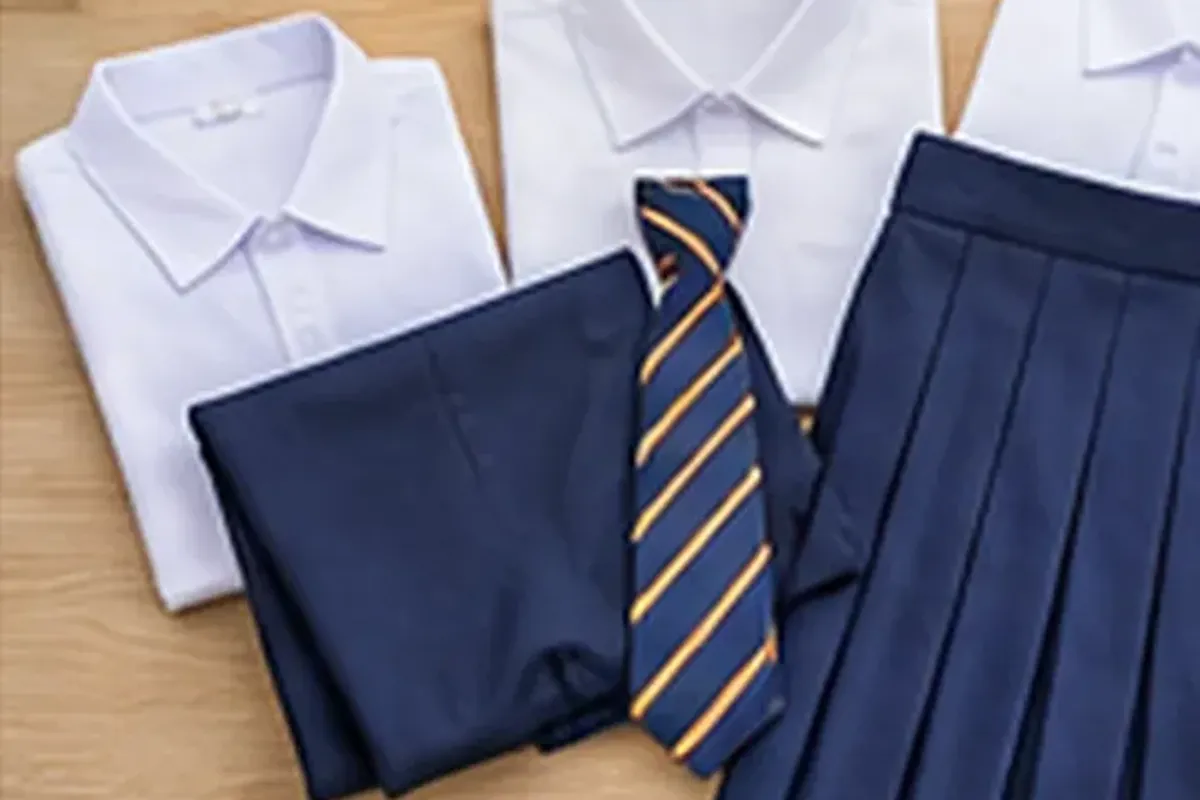
A school skirt size ratio is the share of an order given to each size, and the most reliable way to build one without sales history is from roll numbers: the count of students in each year group who wear the skirt. Map each year group to the sizes it usually wears, spread the students across those sizes, then add a margin to the sizes that sell first.
This method is for a school, shop or distributor placing a first order of a skirt style, or switching a school to a new skirt. Once a year of sales exists, that data replaces the estimate.
Step one: count who wears the skirt
Start with the number of students in each year group, then narrow it to the students who will actually buy this skirt.
- Remove students who wear trousers instead, if the list offers both.
- Remove students in year groups that wear a different style (for example, seniors in a check skirt).
- Keep new intake numbers separate, because new students buy more than one skirt at once.
The result is a short table: year group, students wearing this skirt, and skirts per student. Two or three skirts per student is a common starting assumption for a new intake; returning students buy fewer.
Step two: map year groups to sizes
Each year group spreads across two or three sizes, because children of the same age differ in build. A simple mapping puts most of a year group in its own age size and a smaller share in the sizes either side.
| Year group (example ages) | Main size | Also wear |
|---|---|---|
| Age 5–6 | 5–6 | 4–5, 6–7 |
| Age 8–9 | 8–9 | 7–8, 9–10 |
| Age 11–12 | 11–12 | 10–11, 12–13 |
| Age 14–15 | 13–14 or 15–16 | First waist size |
| Senior years | Core waist sizes | Smallest and largest waists |
Add the students for each size across all year groups. That total, divided by the total number of skirts, is your raw ratio.
An example split per 100 skirts
The figures below are a starting example to adjust against your own roll or sales data. They show the shape of a ratio for a school with juniors and seniors on the same plain pleated skirt.
| Size band | Skirts per 100 (example) | Note |
|---|---|---|
| Age 3–4 to 5–6 | 8 | Depends on whether the school has a nursery intake |
| Age 6–7 to 8–9 | 18 | Steady, even spread |
| Age 9–10 to 11–12 | 24 | Peak at the move to secondary |
| Age 12–13 to 15–16 | 26 | Largest band; build varies widely |
| Senior waist sizes | 20 | Core waists deep, outer waists light |
| Margin for exchanges | 4 | Placed in the two fastest sizes |
A school without a junior section would drop the first rows and spread the order across the older sizes instead.
Step three: check the ratio before ordering
Raw numbers need a sanity check. A few tests catch most problems:
- Every size has at least a few pieces, so nobody is turned away on day one
- The two sizes either side of the age-to-waist switch overlap
- The fastest-selling sizes carry the margin, not the edges
- Each style reaches the minimum of 50 pieces, with sizes mixed inside it
- The ratio is saved, so the first reorder can be compared against it
A size chart that lists every size you plan to order, as on our size charts page, makes it easy to see gaps before the quotation.
Step four: replace the estimate with sales
After one full year, compare sales by size with the ratio you ordered. Sizes that ran out early were under-weighted; sizes left on the shelf were over-weighted. Adjust in small steps, because one year can include an unusual intake. Two years of data gives a ratio you can rely on.
We manufacture school skirts in India in the size split you send, and repeat orders follow the approved sample. See the styles on our school skirts and skorts page. Send us your roll numbers or a draft ratio, and we will quote the order by style, fabric and quantity.
Questions buyers ask
Can one ratio be used for several schools?
For a plain skirt sold to several schools, a combined ratio from all their rolls is usually smoother than any single school’s. For a check skirt worn by one school only, use that school’s numbers, because its size spread may differ from the combined pattern.
How many skirts does each new student buy?
It varies by school and season, but new students usually buy two or three skirts in the first weeks, while returning students replace one or two a year. Ask the school or check last year’s sales to set a realistic figure for your own ratio.
Should a skort use the same ratio as the skirt?
Rarely. Skorts are often worn by younger students or only in warm terms, so their sizes lean towards the junior bands. Build a separate ratio for the skort, even if it is cut from the same fabric and colour as the skirt.