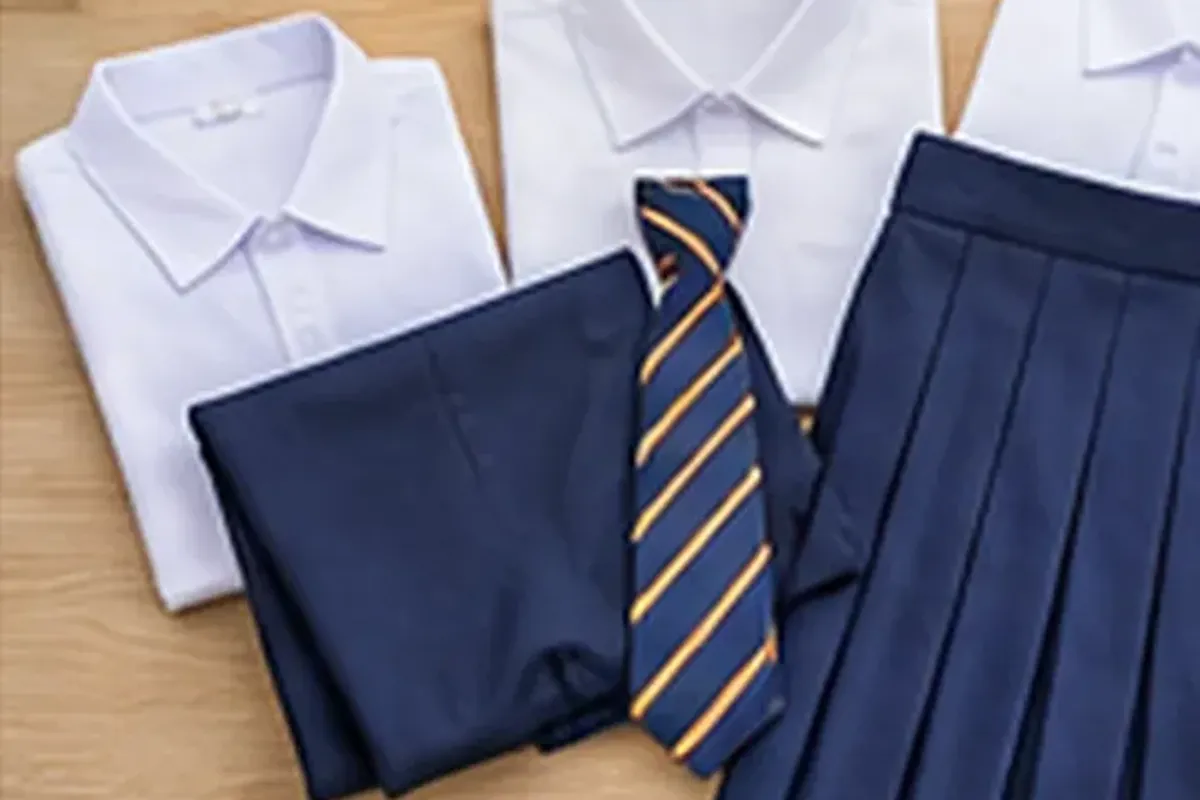
The school skirt seams that matter most are the side seams, the waistband join, the zip seam and, on pleated skirts, the seams hidden inside the pleats. Each needs a secure stitch and a finish on the raw edges, usually overlocking, so the fabric does not fray in the wash or split under strain. Looking inside a skirt is the quickest way to judge how long it will last.
Families judge a skirt by its outside. Shops and schools judge it by how many come back. Seams are where most returns start, so they deserve a few lines in the specification and a careful look on the sample.
Which seams are in a school skirt?
A typical pleated or A-line school skirt contains these seams:
| Seam | Where it is | What it carries |
|---|---|---|
| Side seams | Left and right hips | Strain when sitting, bending and climbing |
| Centre back seam | Middle of the back, on some styles | Strain across the seat; often holds a zip |
| Panel seams | Between panels on A-line skirts | Shape of the skirt |
| Hidden pleat seams | Inside a pleat, joining fabric widths | Keeps pleats continuous round the skirt |
| Waistband join | Where the skirt body meets the band | Weight of the skirt and pull of fastening |
| Zip seam | Usually the left side | Repeated opening and closing |
| Hem | Bottom edge | Abrasion and catching |
On a fully pleated skirt, fabric widths are often joined inside a pleat fold so the seam is hidden. That keeps the outside clean, but the seam still needs a proper finish because it moves every time the pleat opens.
Common seam finishes
Overlocked seams
The raw edges are trimmed and wrapped in thread by an overlock machine. This is the most common finish on school skirts. It stops fraying, is quick to sew and is easy to inspect.
Pressed-open seams with neatened edges
The seam allowances are pressed flat on either side and each edge is overlocked separately. This gives a flatter seam with less bulk, useful on A-line skirts where a bulky seam might show through.
Enclosed seams
The raw edges are fully wrapped inside the seam, for example in the waistband. Nothing raw is visible inside. This is standard where the skirt body joins the waistband.
Topstitched seams
A line of stitching on the outside holds the seam allowance flat. It adds strength and a crisp, sporty look. Common on skorts and some A-line styles.
What makes a seam last?
A neat finish is only part of the story. These points decide whether a seam survives a year of school wear:
- Stitch density. Enough stitches per centimetre to hold firmly without perforating the fabric.
- Thread strength and colour. A strong thread matched to the fabric, or to the main colour of a check.
- Seam allowance. Wide enough that the fabric does not pull out of the stitching under strain.
- Secure ends. Backstitching or bar tacks at the ends of side seams, zip openings and pocket openings.
- Even tension. A seam with uneven tension puckers and is more likely to break.
Fabric affects this too. Firmer polyester twill holds stitches well. Softer poly-viscose benefits from a slightly wider seam allowance. Our fabrics and colour matching page lists the fabrics we use.
Inspecting seams on a sample
- Turn the skirt inside out: are all raw edges finished?
- Pull gently across each side seam: does it stay closed without gaps?
- Look at the ends of the zip and any pocket openings: are they secured?
- Check hidden seams inside pleats for a neat finish
- Look at the waistband join: is everything enclosed?
- Check thread colour against the fabric
Our school skirts and skorts page lists every style we make. We manufacture in India and check seams in our quality check before dispatch, against the sample you approved. Send your specification or current skirt for a quotation.
Questions buyers ask
Why do skirt side seams split near the hip?
Splitting at the hip usually comes from too narrow a seam allowance, low stitch density or a skirt that is too tight for the wearer. Checking the hip measurement on the size chart alongside the seam construction addresses both causes.
Is an overlocked seam strong enough on its own?
On woven skirts, the strength comes from the main straight stitch that joins the pieces. The overlock finishes the edge to stop fraying. Most school skirts use both together, which gives a durable seam.
Should skort seams be finished differently from skirt seams?
Skort shorts sit against the skin and take more strain at the crotch, so their seams need a soft, neat finish and extra reinforcement. The skirt panel seams can follow the same finish as the matching skirt.