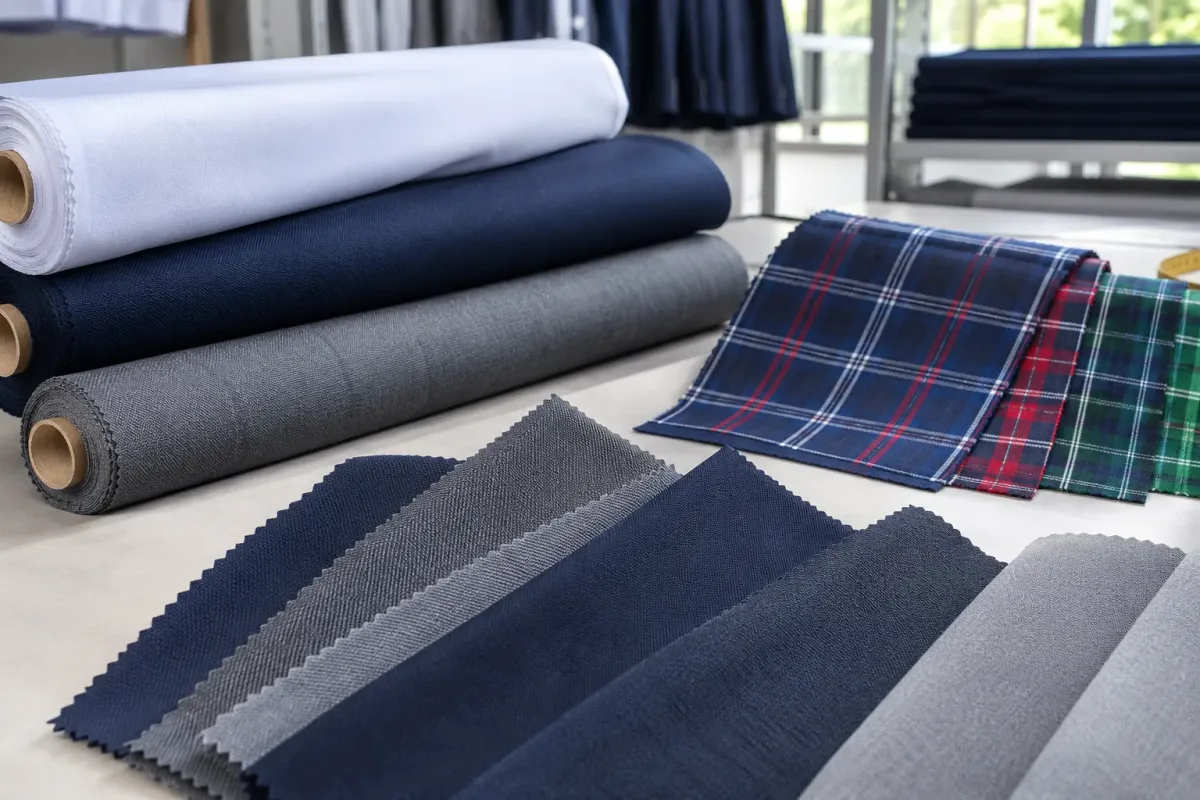
Choose poly-cotton piqué if your buyers want a softer, more cotton-like polo for everyday wear, and polyester piqué if the polo will double as sportswear or needs to dry quickly. Both are the same knitted piqué structure, so the polo looks alike at a glance; the difference is in feel, care and how the colour and logo behave.
This post explains the two piqué polo fabrics we use and how a trade buyer can decide between them.
What piqué is
Piqué is a knitted fabric with a fine raised texture, a little like a small honeycomb on the outer face. It is the usual fabric for polo shirts because it holds its shape around the collar and placket and lets air move through. Both of our polo fabrics are piqué knits; what changes is the yarn.
Poly-cotton piqué blends polyester with cotton. It has a softer, more natural handle, closer to a cotton polo.
Polyester piqué is made from polyester alone. It feels smoother and slightly cooler to the touch, and it tends to dry faster after washing.
Our fabrics and colour matching page explains how fabric is confirmed and how colour is approved before bulk production.
How they compare
The table below sets out the practical differences for a uniform buyer. These are general tendencies of the two fabrics, not test results, and the fabric for your order is confirmed at quotation.
| Point | Poly-cotton piqué | Polyester piqué |
|---|---|---|
| Handle | Softer, more like cotton | Smoother and lighter feel |
| Look | Matt, natural finish | Slightly brighter surface |
| Drying | Dries at a normal pace | Tends to dry faster |
| Typical use | Everyday uniform polo | Polo that is also worn for PE or sport |
| Colour matching | Works well for most school colours | Works well for most school colours, including bright shades |
| Logo | Embroidery or print | Embroidery or print; print method agreed on the sample |
| Matching other garments | Sits well beside cotton-rich shirts and sweatshirts | Sits well beside polyester PE kit |
| Selling point to parents | Comfort for a full school day | Easy care and quick turnaround on wash day |
Neither fabric is better in every case. The right one depends on how the polo is worn on your uniform list.
Choosing for your uniform list
A few questions usually settle the choice:
Is the polo worn all day in class? If the polo replaces a shirt and tie for everyday wear, many buyers prefer poly-cotton for its softer feel.
Is the polo also used for PE? If the same polo is worn for sport, or sits in the PE kit list, polyester piqué fits more naturally beside other polyester sportswear.
What does the polo sit next to? A polo under a poly-cotton sweatshirt often looks more consistent in poly-cotton. A polo worn with polyester PE shorts may look better matched in polyester.
What do you sell now? If your current polo sells well and attracts no complaints, keep the same fabric. Changing fabric part-way through a uniform’s life can leave two slightly different polos on the shelf. Send us your current polo and we suggest the closer match.
Is the colour bright or unusual? For strong school colours, ask for a swatch in both fabrics if you are undecided. The same colour can read slightly differently on each.
Construction details that matter in both fabrics
Fabric is one part of a polo. Whichever piqué you choose, agree these on the sample:
- the collar rib: its height and how it sits once buttoned
- the placket: length, number of buttons, and whether it is reinforced at the base
- the sleeve finish: plain hem or rib cuff
- side vents at the hem, if you want them
- the neck tape inside the back neck, which keeps the neckline tidy
- the logo: method, size and left chest position
If you send a polo you sell now, we follow it for these details and match its colour. You approve a sample before bulk production, and repeat orders are made to that sample.
Ordering
The minimum is 100 pieces per style, with sizes mixed within it. If you want the same polo in both fabrics, for example poly-cotton for everyday wear and polyester for a sports polo, treat each as its own style. You can see the polo styles, fabrics and sizes on our school polo shirts page.
Tell us your polo style, the fabric you prefer or the polo you sell now, your colours and your logo, and we will prepare a quotation. We quote per style, by fabric, quantity and branding.
Questions buyers ask
Is the polo collar made from the body fabric?
No. The collar and any cuffs are knitted rib, matched in colour to the body or set in a contrast. Rib can take dye slightly differently from piqué, so approve the rib shade together with the body swatch.
Do small logo details show clearly on piqué?
The raised texture of piqué can soften very fine lines and small lettering. A slightly larger logo, simpler artwork or a printed method can help, and the result is checked on the sample before production starts.
How should families wash piqué polos?
Washing inside out at a moderate temperature protects the logo and the textured face of either fabric. Avoid a hot tumble dryer and a hot iron on the logo. The care label shows the wording you specify.