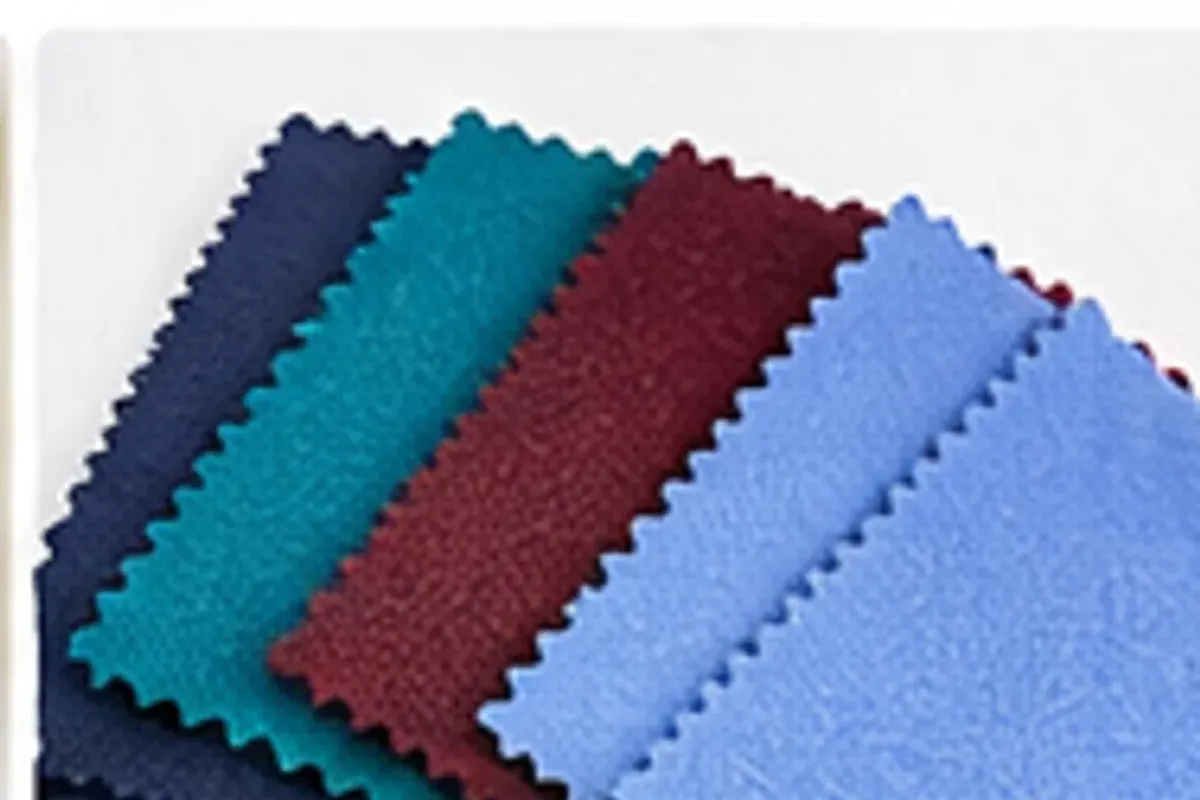
Nursery uniform colour matching starts with a physical reference from the buyer, such as a garment, a fabric swatch or a colour-standard number, which we match on the nursery fabric and send back for approval before any cloth is cut. On a two-colour set, each colour is matched and approved separately, then judged together on the sample. A clear reference and a clear approval are what keep the shade steady from the first order to the reorders that follow.
What reference should you send?
| Reference | How useful it is | Notes |
|---|---|---|
| A current garment | The most useful | Shows colour, fabric and finish together |
| A fabric swatch | Very useful | Enough to cover a palm is plenty |
| A colour-standard number | Useful | Good for new colours; still compared on the actual fabric |
| A paint chip or printed card | Limited | Paint and print look different from dyed cloth |
| A photo or screen colour | Least useful | Screens and cameras change colours |
If you can, send the reference in the fabric type you plan to order. A navy on a cotton swatch may look a little different when matched on poly-cotton, because the two fibres take dye differently.
How a colour is matched and approved
- You send the reference. Mark it with the garment it belongs to: “smock body”, “collar”, “shorts”.
- We match it on the chosen fabric. Poly-cotton or cotton, as quoted.
- We send the colour for your approval before cutting. Look at it in daylight, next to your reference.
- You approve or comment. “Slightly too green” or “a touch darker” is useful feedback.
- The approved colour goes into the sample, and the sample becomes the reference for production.
Matching more than one colour in a set
Many nursery uniforms use one main colour with a contrast collar or trim. A pinafore set may pair a dark pinafore with a light blouse; a shirt-and-shorts set may have different colours top and bottom. Each piece is matched to its own reference, and you see the set together on the sample.
Things to watch when two colours sit side by side:
- Light colours next to dark. A white collar beside navy can make the navy look darker than on its own.
- Two tones of one colour. A sky blue shirt with navy shorts should look like a deliberate pair, not a near miss. Make the difference clear.
- Gingham with a solid. The white yarns in a check lighten its colour, so a solid in the same named colour may look stronger.
Viewing colour correctly
Colour looks different under different light. When checking a matched swatch or sample:
- Look in daylight, near a window, not under a single warm bulb.
- Put the reference and the match side by side, touching.
- Look at both from the same angle; woven fabric can shift slightly with direction.
- Do not judge from photos alone.
Our fabrics and colour matching page explains our general approach to matching across garment types.
Keeping colour steady on reorders
Fabric is dyed in batches, and small differences between batches are a normal part of textile production. The approved sample, kept safely by the buyer, is the reference for repeat orders. A few habits help:
- Keep one approved sample of each colour, labelled and out of the light
- Record the colour reference on your specification sheet
- Send the approved sample, or a garment from the first order, with reorders
- If a nursery changes its colour, treat it as a new approval, not a reorder
The nursery styles are on our nursery and kindergarten uniforms page. We manufacture in India and match colours for nurseries, shops and suppliers worldwide. Send your reference with your enquiry, and the colour approval is part of the sample stage before bulk production.
Questions buyers ask
Can you match a colour from a parent’s old garment?
Yes, if the garment shows the intended colour. A faded garment gives a faded match, so choose one that has seen little washing, or tell us the garment is older and send any unworn fabric you have.
How long does a colour approval take?
The time is confirmed in the quotation as part of the sample stage. Sending a clear physical reference at enquiry, rather than a photo, usually shortens the back-and-forth.
Can every nursery in a group have its own colour?
Yes. One style can be made in several colours, each matched to its own reference. The colour split is confirmed at quotation, and each colour is approved before cutting.