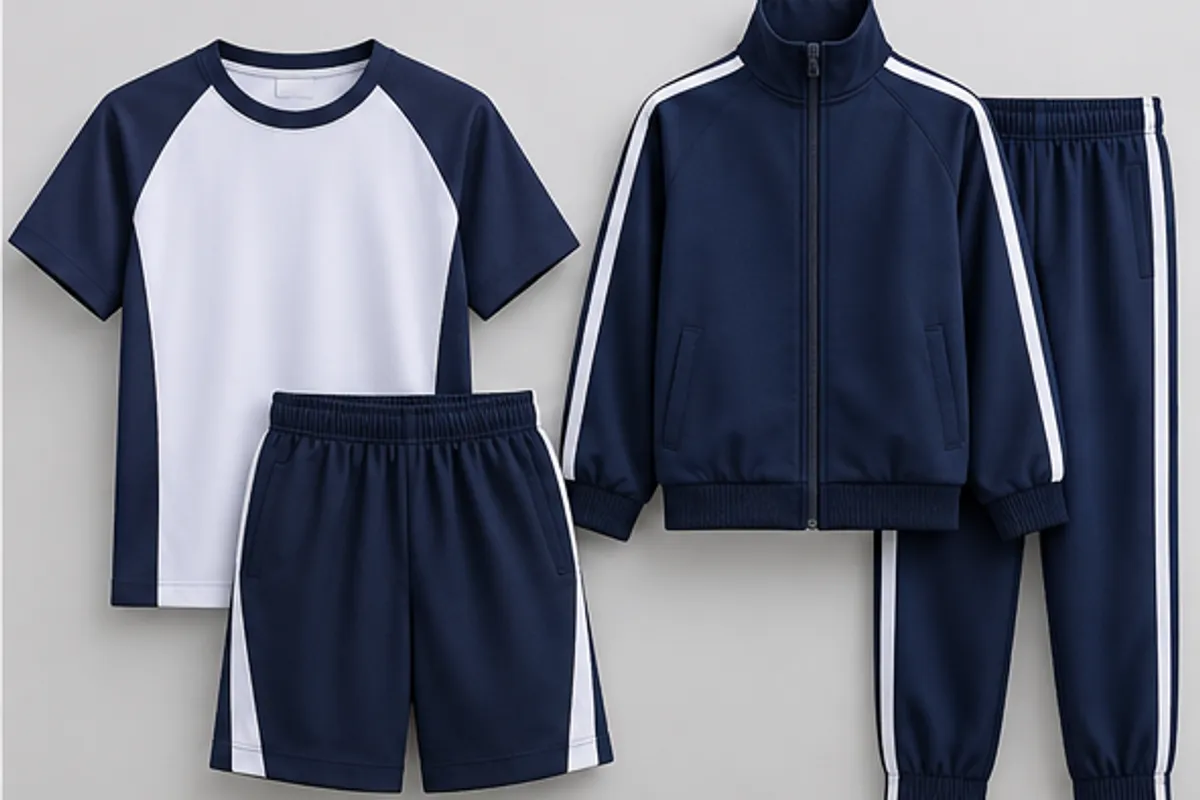
A microfleece school jacket is made from a thin, fine-pile fleece that is light, packs small and layers easily under a coat or over a polo. A heavier fleece has a deeper, loftier pile and feels thicker and softer, so it is often worn as the outer layer on its own. Both are full-zip school jackets; the choice depends on how the fleece fits with the rest of the uniform.
Fleece is described by weight, but a weight figure on its own does not promise warmth or wear. The fabric for your order is confirmed at quotation and on the sample, so you can judge it in the hand.
What is microfleece?
Microfleece is a fleece knitted from fine fibres and brushed to a short, dense pile. It is thin and drapes more like a heavy sweatshirt than a jacket. It suits:
- a mid layer under a coat or waterproof
- a light outer layer in mild weather
- younger children, who find a thick jacket stiff
- schools where students wear the fleece indoors
What is a heavier fleece?
A heavier fleece uses a fuller pile, often brushed on both sides, giving a thicker, more cushioned fabric. It suits:
- an outer layer worn alone on cool days
- outdoor lessons and sports sidelines
- older students who want a more substantial jacket
Comparing the two
| Point | Microfleece | Heavier fleece |
|---|---|---|
| Thickness | Thin | Thick, lofty |
| Feel | Smooth, fine | Soft, plush |
| Bulk under a coat | Little | Noticeable |
| Bulk in a school bag | Folds small | Takes space |
| Shows the badge | Crisp, fine detail holds | Needs a bolder badge |
| Drying | Quick | Slower |
| Where it is worn | Indoors and out, as a layer | Mostly outdoors, as the top layer |
| Look | Neat, close | Casual, outdoor |
These are general descriptions; no warmth rating is claimed for either. The right fleece for your school depends on how it will be worn and with what.
Questions to ask before choosing
Is the fleece worn under or over other layers?
If students wear a blazer or a waterproof coat on top, a microfleece fits underneath. If the fleece is the outer layer, a heavier one feels more substantial.
Is the fleece worn indoors?
Classrooms are warm. A thick fleece worn all day indoors is uncomfortable, and students take it off and lose it. A microfleece is easier to keep on.
Does it need to match a tracksuit?
A microfleece sits closer to the tracksuit top in bulk and layers over it neatly. A heavier fleece over a tracksuit top can look bulky on younger children.
How fine is the badge?
A detailed crest holds better on microfleece’s short pile. On a lofty fleece, the badge may need to be enlarged or simplified.
Colour on two fleece weights
The same colour reference looks slightly different on a fine and a lofty fleece, because the deeper pile catches light differently. If a school uses both, for example a microfleece for juniors and a heavier one for seniors, compare the two samples together in daylight. Our page on fabrics and colour matching explains how shades are approved.
Fleece jackets are full zip, with contrast panels or piping if specified. You can see them with our tracksuit styles on the school tracksuits and jackets page. A microfleece and a heavier fleece would be two styles, each with a minimum of 100 pieces.
Tell us how the fleece will be worn and what goes with it, and we will propose a fabric and make a sample with your quotation.
Questions buyers ask
Is microfleece warm enough for winter?
That depends on what is worn with it. Microfleece works well as a layer between a polo or jumper and a coat. Schools in cold climates usually list it with a separate coat rather than as the only outer layer.
Does a heavier fleece last longer?
Not automatically. Wear depends on the fibre, the finish, the pile and the washing routine as much as the thickness. Handling and washing a sample is the most practical way to judge it.
Can microfleece have contrast panels?
Yes. Its thin fabric takes panels and piping more neatly than a lofty fleece, so it suits schools wanting a fleece that echoes the tracksuit layout. Panels are shown on the sample as specified.