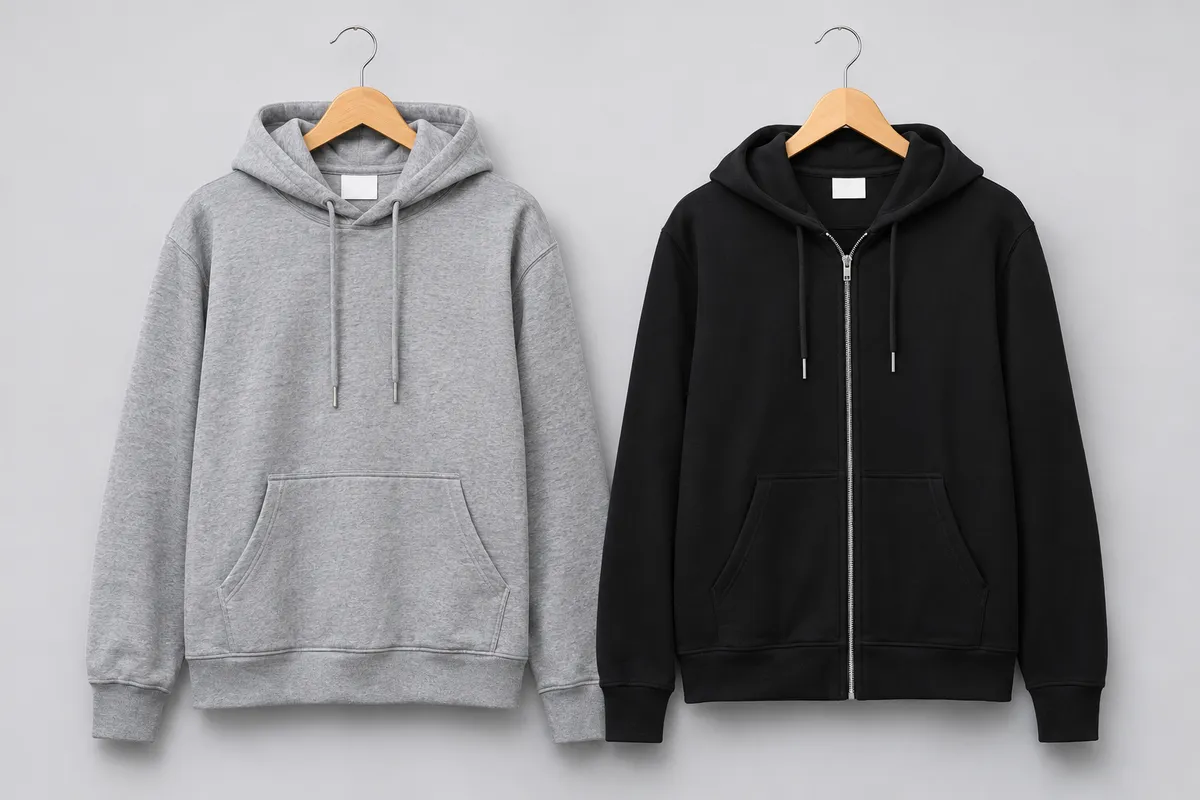
School uniform layering is the practice of building warmth from several thinner garments, a shirt or polo, then a jumper or sweatshirt, then a blazer or fleece, rather than relying on one heavy piece. Students add or remove a layer as the classroom, the playground and the weather change. For the buyer, layering means each garment must be specified with the ones above and below it in mind, so they fit together and look like one uniform.
How the layers stack
Think of three layers, and name what fills each one on your uniform list.
| Layer | Purpose | Common garments | What its spec must allow for |
|---|---|---|---|
| 1. Next to the skin | Comfort, the visible collar | Shirt, blouse, polo shirt | A collar that sits neatly over a jumper neck |
| 2. Middle | Warmth indoors | Knitted jumper, cardigan, slipover, sweatshirt | Room to go over layer 1 without pulling |
| 3. Outer | Warmth outdoors, formality | Blazer, fleece jacket, tracksuit top | Room for layers 1 and 2 at chest and arm |
A slipover, a sleeveless knitted jumper, is a useful in-between layer: warmth on the body without bulk in the sleeves under a blazer.
Where layering goes wrong
Most layering problems come from garments specified one at a time by different people. Three are common:
- A tight middle layer. If the jumper’s chest measurement is too close to the shirt’s, it rides up and the shirt collar is pushed out of place.
- A blazer with no room. A blazer chosen for a slim look over a shirt alone will pull across the back once a jumper goes underneath.
- Mismatched necklines. A crew-neck sweatshirt over a shirt and tie hides the tie; a V-neck shows it. Decide which look the school wants.
Each is avoided by specifying the layers together and checking them on samples worn one over another.
Colours that work in layers
When three garments are worn at once, their colours meet at the collar, the cuffs and the hem. Common approaches:
- One dark colour for layers 2 and 3, such as navy jumper under a navy blazer, with a white or pale shirt.
- A contrast middle layer, such as a grey jumper under a black blazer, with braid or stripe trim tying them together.
- A coloured polo under a matching sweatshirt for primary schools, with the logo on both.
Approve the colours side by side, because a navy knit and a navy woven can look like two shades. Our knitted jumpers and cardigans page shows stripe trim options, and the school blazers page shows the outer layer.
Specifying layers together
Before asking for a quotation, write the layering rule for the school in one line, for example: “white shirt and tie, navy V-neck jumper, navy blazer; fleece jacket allowed outdoors”. Then work through the list:
- Each layer named, with which garments are required and which optional
- Necklines chosen so the shirt collar and any tie sit correctly
- Chest and sleeve allowances in the size chart for middle and outer layers
- Colours approved together across woven and knitted fabrics
- Logo positions checked so badges do not stack on top of one another
- Samples of all layers tried on together before bulk production
That last point is worth the time. A sample set worn one over another shows fit problems that measurements alone hide.
We manufacture shirts, knitwear, sweatshirts, blazers and fleece jackets in India, so one quotation can cover every layer. Our page for schoolwear suppliers and distributors explains how we work when you specify several garments for several schools.
If you are building or revising a layered winter uniform, send us the full set of garments and we will quote them together, with samples that can be checked as a set.
Questions buyers ask
Should a school allow a sweatshirt and a jumper as alternatives?
Many primary schools do, because some families prefer a fleece sweatshirt for washing and others prefer knitwear. Offering both doubles the middle-layer stock, so shops should ask the school which one sells and order the alternative in smaller quantities.
Is a slipover warm enough under a blazer?
A slipover keeps the body warm while leaving the arms free, which suits heated classrooms and a blazer worn on top. In colder buildings a full-sleeve jumper or cardigan is usually preferred.
Does a fleece jacket replace the blazer in winter?
Some schools allow it for outdoor wear and trips, but keep the blazer for lessons and formal days. Others drop the blazer entirely at primary level. The uniform list should say clearly which applies.