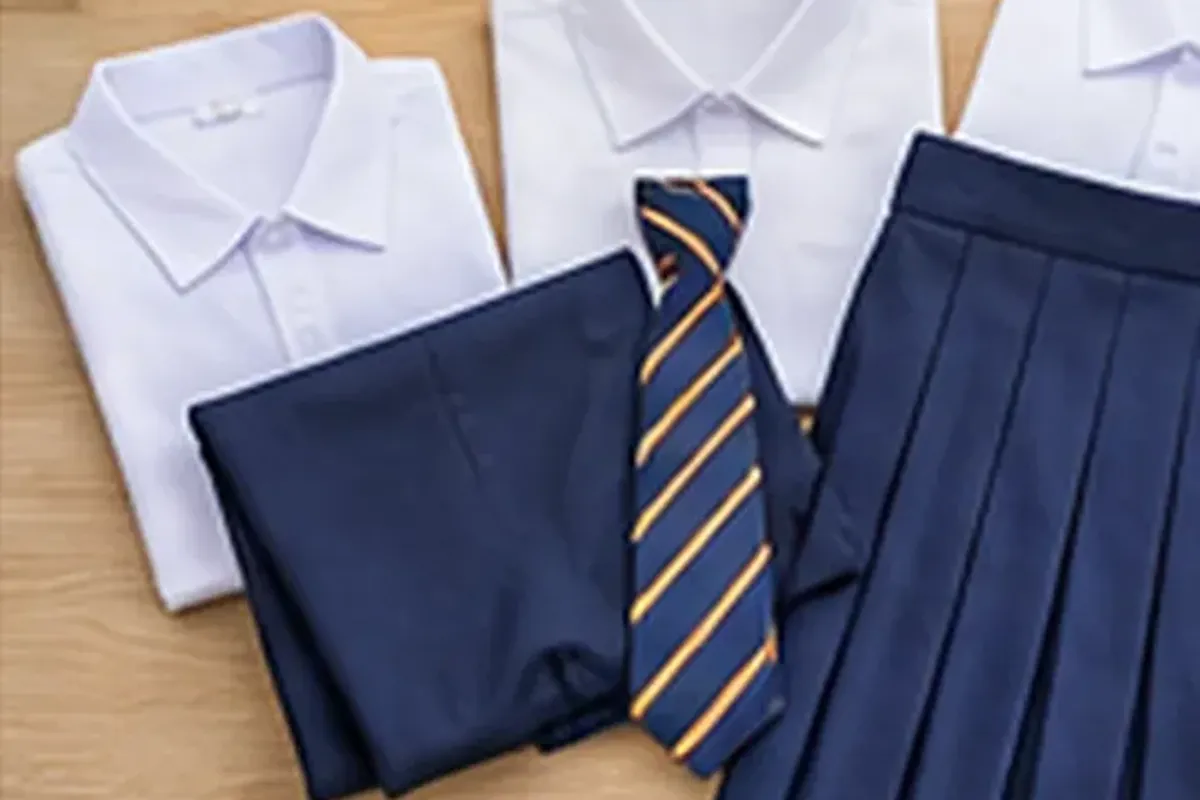
Skort construction joins two garments into one: a pair of shorts and a skirt panel, cut from the same fabric and sewn into a single shared waistband. The shorts are assembled first, the panel is made and finished separately, and the two are then attached together at the waist, with the side seams and fastening tying them into one piece. Knowing the order helps a buyer understand what to inspect on a sample and where wear tends to show.
A skort looks simple on the hanger, but it has more seams than a skirt and carries more strain, because children run, climb and sit on the floor in it. The construction points below are the ones worth checking.
The construction sequence
The order varies a little with the panel style, but a typical school skort is made in these stages:
| Stage | What happens | Why it matters |
|---|---|---|
| 1. Cutting | Shorts, panel and waistband are cut from one fabric lay | Keeps the colour identical across all parts |
| 2. Shorts assembly | Inside leg and crotch seams are joined, then the side seams | Sets the fit and comfort of the garment |
| 3. Shorts hems | Leg openings are turned and stitched | Prevents fraying where the leg moves most |
| 4. Panel making | Pleats are folded and set, or the plain panel is shaped | Gives the skort its skirt look |
| 5. Panel hem | The panel hem is finished before joining | Easier to sew flat at this stage |
| 6. Joining at the waist | Panel is laid over the shorts and both are caught into the waistband | Locks the two parts together |
| 7. Fastening and elastic | Zip, button or elastic back is added | Sets how the skort goes on and fits |
| 8. Final press and check | Pleats are re-pressed; seams and measurements checked | Leaves the skort ready to pack |
The panel is often attached at the side seams as well as at the waist, especially on wrap-over styles, so it does not swing loose from the shorts.
Where does a skort take the most strain?
Some points carry more stress than any part of a plain skirt:
- The crotch seam of the shorts, which takes strain every time the child sits or climbs.
- The waistband join, where the panel and shorts are both sewn in and pulled in different directions.
- The side seam junction, where the panel meets the shorts at the hip.
- The bottom of a wrap-over edge, which can catch and pull during play.
These are the places to inspect closely on a sample. Firm stitching, a reinforced crotch seam and a secure finish at the ends of the side seams help the skort last through a school year of active wear.
Seam finishes inside the skort
Because the shorts sit against the skin, inside seams should be neatened so they do not rub or fray. Overlocked edges are common. Where the panel is attached at the waist, the seam allowances are enclosed in the waistband, so nothing raw shows inside.
Fabric behaviour in construction
We make skorts in poly-viscose or polyester twill, with the shorts and panel in the same fabric and colour. Cutting all parts from one fabric lay matters: it keeps the shorts and panel exactly the same shade, which is visible when the shorts show during play. Polyester twill is a little firmer and holds pleats crisply. Poly-viscose is softer next to the skin. Our fabrics and colour matching page lists both options.
Checking the construction on a sample
When the sample arrives, test it like a child would:
- Sit cross-legged and stand up: do the shorts pull or ride up?
- Look inside: are all seams neatened, with no raw edges against the skin?
- Pull gently at the waistband join: is the panel firmly held?
- Check the crotch seam for reinforcement
- Check that the panel hangs evenly over the shorts
- Confirm the shorts do not show below the panel when standing
Our school skirts and skorts page lists the skort alongside our skirts. We are a manufacturer in India, and the construction you approve on the sample is followed in bulk. Send your skort specification or a sample to copy, and we will prepare a quotation.
Questions buyers ask
Is a skort harder to make than a pleated skirt?
It involves more parts and more seams, because the shorts are a garment in their own right. That extra work is reflected when each style is quoted by fabric, quantity and branding.
Can the panel be removed from the shorts for washing?
No. In a school skort the panel and shorts are sewn permanently into one waistband, so the garment is washed as a single piece. That keeps it simple for families and avoids parts going missing.
Why is the panel sometimes stitched to the shorts at the side?
Stitching the panel at the side seam stops it flapping away from the shorts during running and play. It also keeps the skort looking tidy, as the panel stays in line with the body.