A hooded fleece jacket for school gives students a little extra cover for the head and neck outdoors, and it reads as more casual than a collared fleece. A plain stand or funnel collar is tidier, packs flat and sits better under a coat or blazer. A hood is an option on our fleece jackets, as specified, so the decision rests with the school or shop.
Most of the questions about hoods are practical rather than about looks. This post sets them out so buyers can decide quickly.
Reasons schools add a hood
- Outdoor time. Primary schools with long outdoor play, forest-school sessions or walking trips sometimes like a hood for light drizzle and wind on the ears. A fleece hood is not waterproof, and should not be described as rain protection.
- One layer instead of two. In mild climates, a hooded fleece can be the only outer layer on the list.
- Student preference. Older students often like a hood, which can help a fleece get worn rather than left in a bag.
Reasons schools leave it off
- Under a coat or blazer. A hood bunches at the back of the neck when another layer goes on top.
- Indoor rules. Some schools do not allow hoods up indoors and prefer not to have them at all.
- Back print space. A hood covers the upper back, so a school name or house name has to sit lower down.
- Drawcords. Many buyers avoid drawcords on children’s hoods. A hood can be made without one, as specified.
Hood or collar: a quick comparison
| Feature | Hooded fleece | Collared fleece |
|---|---|---|
| Head cover outdoors | Some | None |
| Look | Casual, outdoor | Neat, uniform |
| Under another layer | Bulky at the neck | Lies flat |
| Back print position | Below the hood | Across the shoulders |
| Drawcord question | Yes, decide one way | Not needed |
| Packing in a school bag | Bulkier | Folds smaller |
If you choose a hood
Decide these details before the sample:
- Hood shape. A two-piece hood is simpler; a three-piece hood with a centre panel sits closer to the head. Either can be specified.
- Lining. A single layer of fleece is softer and lighter. A hood lined in a contrast fabric shows a second school colour when it is down.
- Drawcord or none. For younger children, many buyers choose a hood with no drawcord, or a hood shaped to sit close without one.
- Zip height. On a hooded fleece, the full zip usually runs to the neckline, not up into the hood.
- Size grading. Check the hood on a small and a large size at sample stage, so it does not swamp the smallest children.
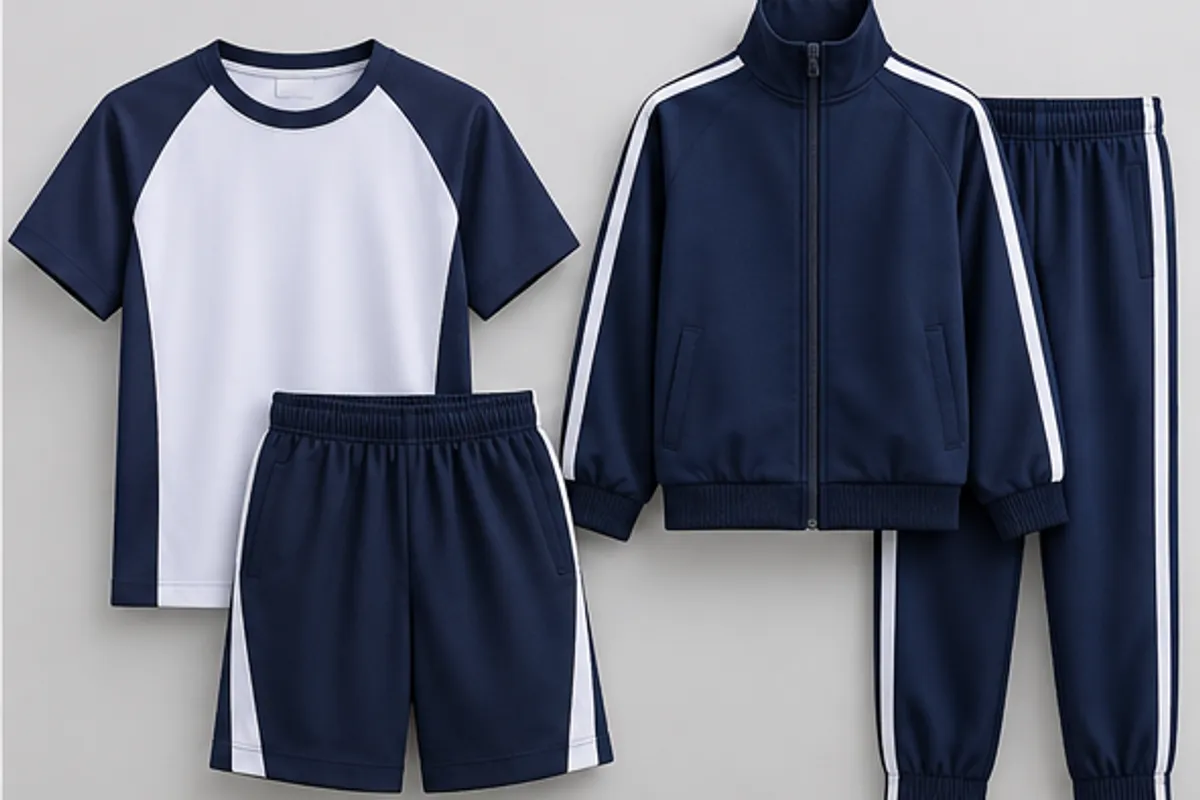
Fleece jackets are full zip; contrast panels or piping if specified. The hood, if chosen, is confirmed on the sample along with the logo position. You can see our fleece jackets alongside the tracksuits on the school tracksuits and jackets page.
Who decides?
For a school buying direct, the hood is usually a uniform-policy choice made by staff. For a shop or supplier, it is often a stock choice: a hooded and a collared fleece are two styles, each starting at 100 pieces, and carrying both doubles the sizes on the shelf. Schools placing their own orders can see how we work with them on the page for schools and school groups.
Tell us whether you want a hood, the colours and the logo position, and we will prepare a sample and a quotation per style, by fabric, quantity and branding.
Questions buyers ask
Can a fleece hood be detachable?
A detachable hood needs a zip or press studs at the neck, which adds parts and sewing steps to every jacket. Most schools choose a fixed hood or none at all. Tell us if you want to discuss it, and we will advise at quotation.
Will a hooded fleece keep students dry?
No. Fleece is a warm, soft knit, not a waterproof fabric, and a hood will soak through in steady rain. Schools needing rain cover usually list a separate waterproof that students wear over the fleece.
Can the hood lining carry a house colour?
It can, but every house then needs its own colour split, which is confirmed at quotation, and shops must stock each version. Most schools keep the hood lining in a single school colour and show house colours elsewhere.