Whether a school logo should be embroidered or printed depends on the garment, not on the school. Embroidery suits heavier and more formal items such as blazers, knitted jumpers, sweatshirts and polo shirts, where a raised, stitched badge looks smart and lasts through years of washing. Printing suits lightweight PE T-shirts, house-colour T-shirts and large back designs, where stitching would feel stiff or heavy. Most uniform lists end up using both.
How the two methods differ
Embroidery builds the logo out of thread stitched into the fabric. It has texture and a slight shine, and it does not crack or peel. It does add a little stiffness, and it struggles with very small text and fine gradients.
Printing lays ink or a transfer onto the fabric surface. It can show fine detail, gradients and large areas of colour, and it stays soft and flexible. On thin, stretchy sportswear it moves with the fabric. It can fade or wear over many washes, depending on the method and how the garment is cared for.
| Question | Embroidery | Printing |
|---|---|---|
| Look | Raised, textured, formal | Flat, smooth, sporty |
| Feel on thin fabric | Stiffer patch | Light and flexible |
| Fine detail and small text | Limited | Handles it well |
| Large designs (back prints) | Heavy and stiff | Practical |
| Many colours in one logo | Each colour is a thread change | Handles many colours |
| Long-term wear | Holds up well | Depends on method and care |
Garment by garment
Blazers. Embroidery, almost always. The badge is either stitched onto the breast pocket or made as a separate badge and sewn on. A printed badge on a blazer tends to look out of place.
Knitted jumpers and cardigans. Embroidery. Printing on a textured knit surface does not sit evenly.
Sweatshirts and hoodies. Embroidery for the left-chest uniform badge. Printing for large back designs, such as a leavers’ year or the school name.
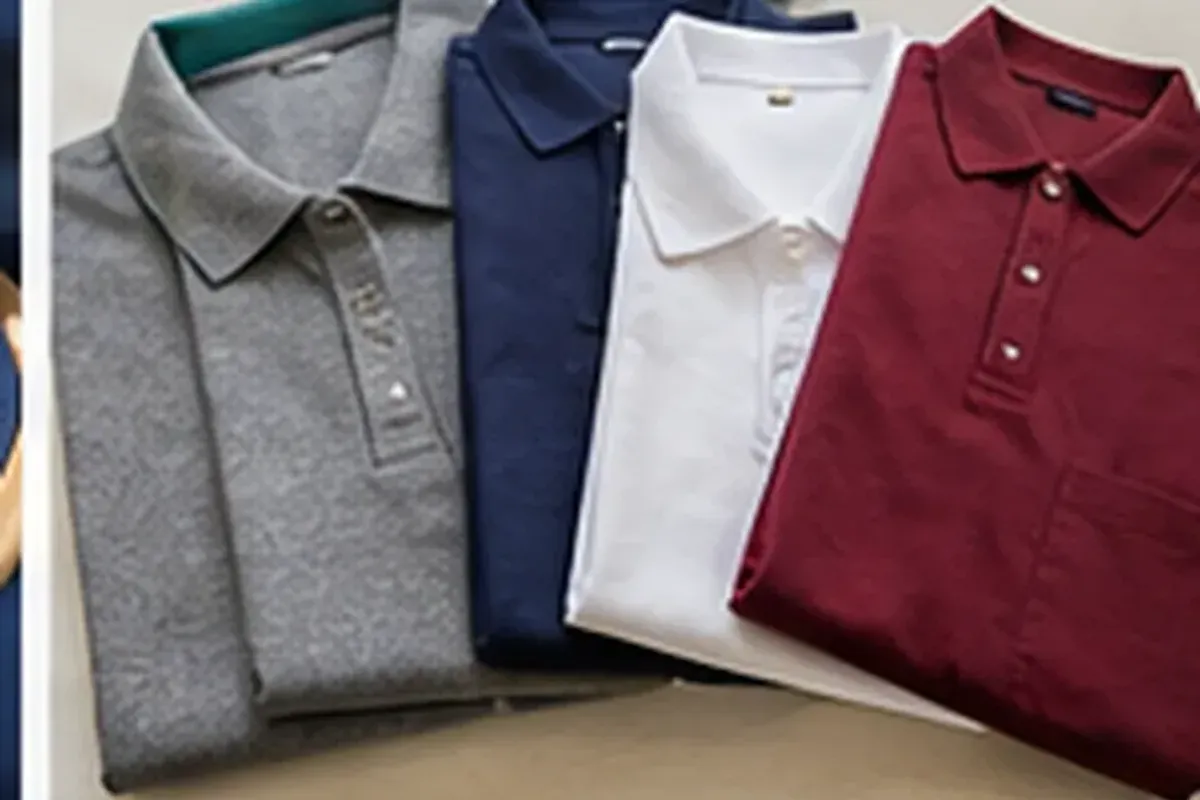
Polo shirts. Either. Embroidery is common on the everyday uniform polo; printing is common on sports polos and on polos ordered in large volumes for a single event.
PE T-shirts and house-colour T-shirts. Printing is the usual choice. A light print keeps the shirt comfortable for sport, and a printed house name on the back is easy to read across a field.
Tracksuit tops and fleece jackets. Embroidery on the chest; a printed school name across the back if wanted.
Shirts, blouses, dresses and pinafores. A small embroidered logo, if any. Many schools leave these plain.
Questions to settle before you decide
Ask yourself these, per garment:
- Will the item be worn every day or only for sport? Everyday wear usually takes embroidery; sportswear usually takes print.
- How detailed is the logo? A crest with a motto in small letters may print more clearly than it stitches.
- How large is the design? A small chest badge can be either; a large back design is nearly always printed.
- Does the uniform need to look matched? If the polo is embroidered and the PE T-shirt printed, check the two versions sit well together when seen side by side.
- Will a shop stock the plain garment and brand it later? That affects whether the logo is applied during production or afterwards.
Logo embroidery or printing is available on every style we make. You do not need to commit to one method for the whole list. Tell us what you would like on each garment, and the method, size and position are confirmed with the sample.
What a uniform shop or supplier should consider
A shop selling to several schools often wants one approach across all of them, so that its stock looks consistent and its sample rail is easy to explain. A common pattern is embroidery on every badged knitwear and woven item, and printing on all PE kit. A supplier tendering for a school contract may want to offer both and let the school choose.
Our page for schoolwear suppliers and distributors explains how we quote several schools on one order. For the PE side of the list, our PE kit and sports uniforms page shows the T-shirt, shorts and sports polo styles we make.
We manufacture in India to the buyer’s specification. Send your garment list, mark embroidery or print against each item, and attach the logo artwork. We will reply with a quotation quoted per style, by fabric, quantity and branding.
Questions buyers ask
Does an embroidered logo last longer than a printed one?
Embroidery generally holds its look through many washes because the thread is part of the garment. A print’s life depends on the print method, the fabric and the wash routine. For daily uniform items that are washed often, many buyers choose embroidery for that reason.
Can the same logo be embroidered on one garment and printed on another?
Yes. Many uniform lists do exactly that, with an embroidered badge on jumpers and polos and a printed version on PE T-shirts. The artwork may need small adjustments for each method, and both versions are shown on the samples.
Is printing a better choice for a logo with many colours?
Printing handles many colours and fine shading more easily. Embroidery can reproduce several colours, but each one is a separate thread, and very subtle shade changes cannot be stitched. A simplified colour version of the logo is often used for embroidery.