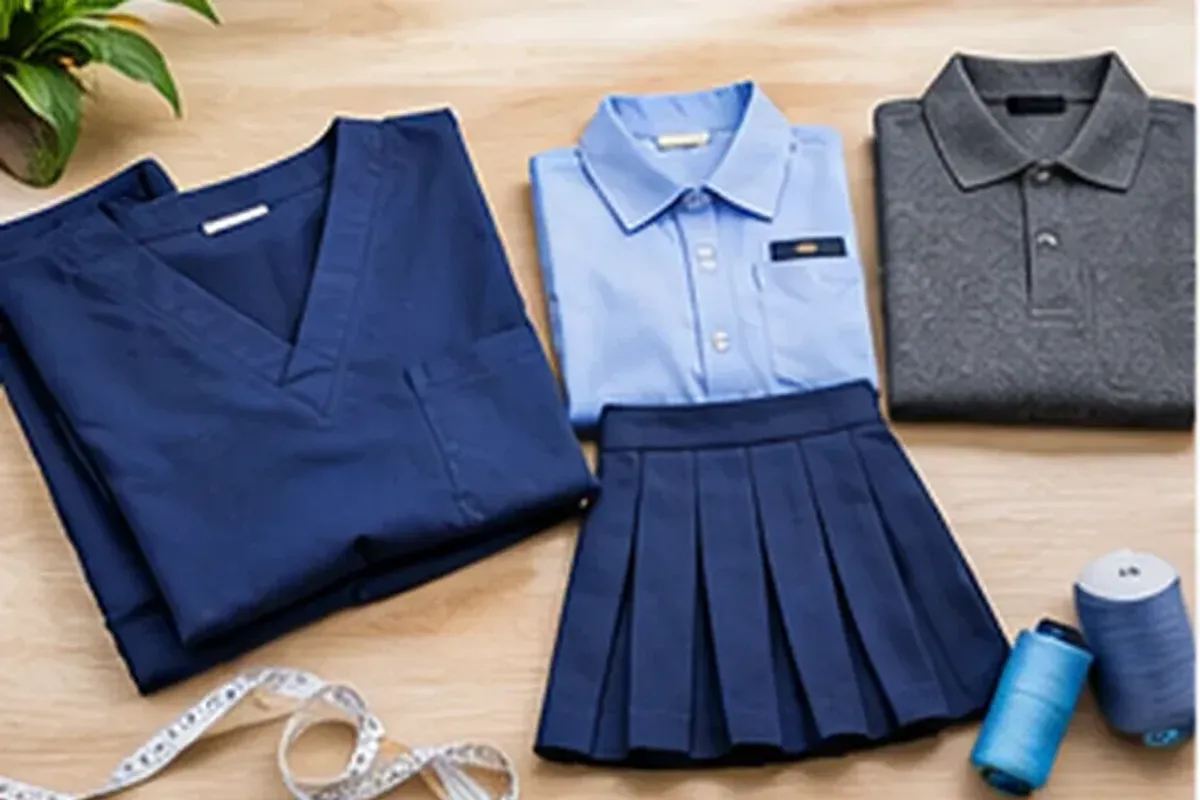
Consistent uniform sizing across garments means that one size label fits the same child in the way they expect, whether the garment is a polo shirt, a sweatshirt, a pair of trousers or a blazer. It does not mean every garment has identical measurements: a jumper needs more room than a shirt. It means the sizes are graded from one shared body chart, so the relationship between garments stays the same from the smallest size to the largest.
Families notice inconsistency quickly. If the age 9–10 polo fits but the 9–10 sweatshirt is tight, they lose trust in the labels and start asking to try everything on, which slows the shop and raises exchanges.
Why sizes drift between garments
Inconsistent sizing usually has an ordinary cause. Knowing the cause makes it easier to specify around it.
| Cause | What happens | How to prevent it |
|---|---|---|
| Garments from several makers | Each maker uses its own body chart | One maker, or one shared body chart sent to all |
| Different patterns built at different times | Shirt pattern updated, jumper pattern not | Review all patterns together when the chart changes |
| Woven and knitted fabric behave differently | Knitwear stretches, woven does not | Allow for stretch in the knit chart, not by guesswork |
| Size labels assigned loosely | A “10” on one item, “9–10” on another | One label system across the whole uniform |
| No layering allowance | Blazer tight over a jumper | Specify which garments are worn over others |
What to specify for consistent sizing
The specification is where consistency is won. These points belong in your request for quotation alongside fabric and colour.
- One body chart. State the body measurements (chest, waist, hips, height, inside leg) each size is meant to fit. Every garment is graded from this.
- Layering order. Say which garments go over which: shirt under jumper, jumper under blazer, polo under sweatshirt. The outer garment needs enough room for the inner one.
- Ease by garment type. Agree, in general terms, how much looser than the body each garment should be. A PE T-shirt and a fitted blouse need different ease even in the same size.
- One size label system. Use the same labels on every garment, or a clear rule for where they change (for example, age bands to collar sizes for senior shirts).
- A sample set to check together. Approve samples of different garments in the same size side by side, on one child or mannequin if possible.
Checking consistency on the samples
The sample stage is the cheapest place to find problems. Put the garments for one size together and look for these points:
- Shirt collar and cuff sit correctly under the jumper and blazer
- Jumper or sweatshirt goes over the shirt without pulling across the chest
- Blazer closes over a jumper in the same size
- Trousers and skirt waist sizes match the same body chart as the tops
- Sleeve lengths step together across shirt, jumper and blazer
- Labels read the same way on every garment
The advantage of one maker for the whole uniform
When the shirts, knitwear, trousers and sportswear all come from one maker, the body chart is shared by default. We manufacture in India and make school uniforms across woven and knitted garments, each style made to your size range and graded from the measurement chart agreed with you. Every repeat order follows the approved sample, so the relationship between garments stays fixed year after year. Our page for schoolwear suppliers and distributors explains how we handle ranges for several schools.
Woven garments start at 50 pieces per style and knitwear at 100, with sizes mixed within each style, so a whole uniform can be sampled and ordered together. If you are bringing school polo shirts, sweatshirts and hoodies and trousers under one chart, send your current body chart or a set of garments in one size. We will quote per style, by fabric, quantity and branding.
Questions buyers ask
Should every garment in a size have the same chest measurement?
No. Each garment needs its own ease: a jumper must be roomier than the shirt beneath it, and a blazer roomier than the jumper. What should be shared is the body chart behind them, so the garments fit together on the same child.
Can consistency be fixed if garments already come from several makers?
It can be improved. Send every maker the same body measurement chart and layering order, then approve samples of different garments in one size together. Differences in pattern style may remain, but the size labels will mean much closer to the same thing.
How do I explain consistent sizing to families?
Publish one size guide for the whole uniform, based on body measurements, and say that the same size is meant to fit across garments. Where a garment differs, such as a blazer worn over a jumper, note it beside that garment.