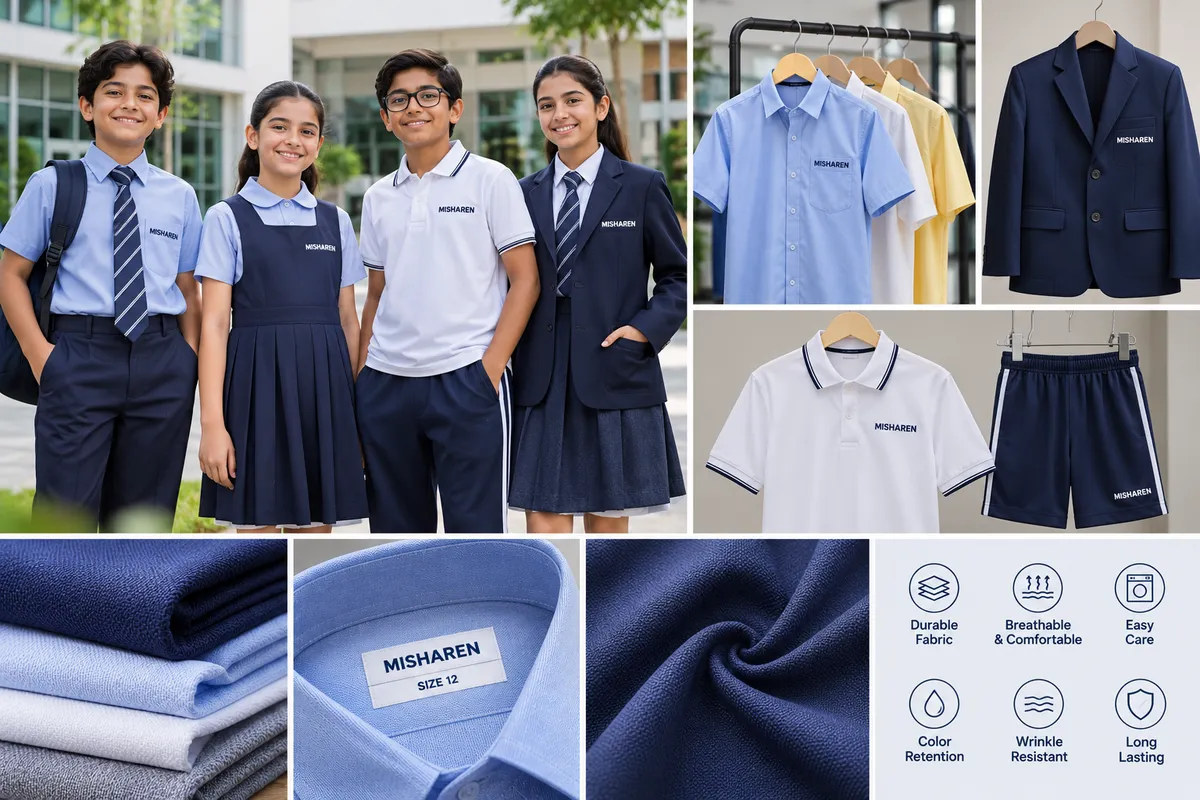
A co-educational school uniform for a school that used to be single-sex is usually built by extending the existing uniform, not replacing it. The school keeps its colours, badge and most familiar garments, adds the styles the new students need, and checks that shared items such as jumpers, blazers and PE kit come in cuts and sizes that fit everyone. Done well, the new students look as if they have always belonged.
This guide covers the specification side of that change. It applies whether a girls’ school is admitting boys, a boys’ school is admitting girls, or both at once.
Which garments need to be added?
Start by listing the current uniform and asking whether each item works for all students.
| Current garment | Works for all? | Likely addition |
|---|---|---|
| Pleated skirt | Not for everyone | Trousers in the same colour, regular and slim fit |
| Blouse with revere collar | Not for everyone | Shirt with a standard collar, or a polo |
| Trousers, regular fit | Not for everyone | Girls’ cut trousers |
| Knitted V-neck jumper | Usually yes | Check the size range at the top end |
| Blazer | Depends on cut | A second blazer cut, or one cut for all |
| Summer dress | Not for everyone | Shorts and a short-sleeve shirt or polo |
| PE kit | Usually yes | Check shorts length and the size range |
Shared items are the quickest wins. A knitted jumper or cardigan in the school colour, with the school badge, usually works for every student, as long as the size range is wide enough.
Blazers: one cut or two?
The blazer is the garment most often tailored by gender. A boys’ blazer and a girls’ blazer have different patterns, button sides and size charts. A co-educational school can:
- offer both cuts, open to any student, as two separate styles
- choose one cut for all students, often the straighter of the two
- drop the blazer for some year groups and use a jumper as the top layer
Our school blazers come in boys’ and girls’ cuts, in polyester or poly-viscose, lined or half-lined as specified. Whichever route you choose, match the braid and badge across both cuts so they read as one uniform.
Sizes for a new student body
A school that has only ever dressed one group of students may have a size range shaped around them. New students may need:
- larger chest sizes on jumpers, shirts and blazers
- longer leg lengths or different waist sizes on trousers
- different proportions on polo shirts and PE kit
Review the size range for every shared garment. Our size range is built from the size list you send, so adding sizes is a matter of extending that list.
Writing the list as one uniform
The new list should present one uniform with options, not two uniforms side by side. Describe each garment once, with its variations: “Trousers, grey, regular fit or girls’ cut” rather than separate headings for boys and girls. This keeps the list open to every student and makes stock records simpler.
Ordering the additions
New styles have their own minimums: 50 pieces for woven garments and 100 for knitwear and sportswear, with sizes mixed within a style. In the first year of co-education, the new intake may be small. Ordering two years of a new style at once, or choosing shared styles where possible, helps.
Our page for schools and school groups explains how we add styles to an existing specification and match colours to current garments.
When your list is settled, send us the new garments with a current item from the existing uniform for colour reference, and we will quote each style.
Questions buyers ask
Will new garments match the colour of the existing uniform?
They can. Send a current garment as a reference, and we match the fabric shade to it. You approve the shade on the sample before production, so new trousers, shirts or blazers sit comfortably alongside existing items.
Should the school rename garments on the list?
It helps to use neutral names, such as “trousers” or “skirt”, rather than gendered ones. Students then choose from the options, and the list reads as a single uniform for the whole school.
Do we need new PE kit?
Often the existing PE T-shirt and shorts work for everyone, perhaps with a wider size range. Some schools add a skort or a different shorts length. Check the kit with students from the new group before ordering.