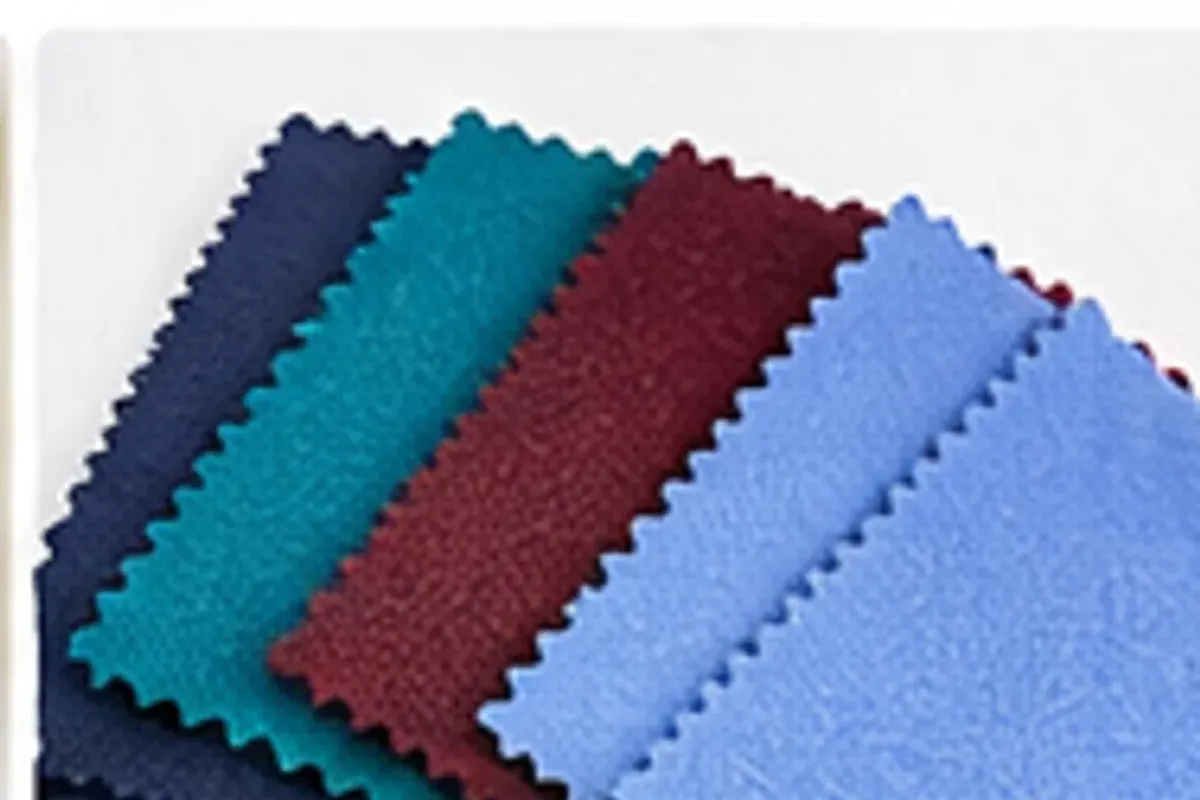
Acrylic school knitwear is the practical default for jumpers and cardigans that are washed often and need to hold a strong school colour. A cotton-acrylic blend is the choice when a softer, more natural feel matters more, and buyers are prepared to give the garment a little more care.
Both yarns are used for school knitwear, and we make V-necks, cardigans and striped-trim styles in either. Slipovers are made in acrylic. The yarn is confirmed at quotation and on the sample.
What each yarn is
Acrylic is a synthetic fibre spun to feel like wool. It is light, warm for its weight, and keeps its colour well. It is also easy to wash at home, which matters for a garment families wash every week.
Cotton-acrylic mixes cotton with acrylic. The cotton brings a softer, more breathable handle and a less synthetic look. The acrylic helps the knit hold its shape and colour. The result sits between the two fibres, and buyers often describe it as feeling closer to a natural yarn.
Comparing them side by side
| Point to weigh | Acrylic knit | Cotton-acrylic knit |
|---|---|---|
| Handle | Soft, light, slightly synthetic | Softer and more natural |
| Warmth | Warm for its weight | Slightly cooler, more breathable |
| Colour | Holds strong and dark colours well | Holds colour well; very bright shades can look a touch softer |
| Washing at home | Easy, dries fairly quickly | Needs gentler care; dries more slowly |
| Shape after washing | Holds shape when washed as labelled | Can relax if washed hot or tumble dried |
| Stripe trim | Crisp, clear stripes | Clear stripes with a softer look |
| Styles we make in it | Jumper, cardigan, slipover, striped trim | Jumper, cardigan, striped trim |
This table compares general behaviour, not tested ratings. How a particular yarn feels and wears is judged on the sample you approve, and every repeat is made to that sample.
How yarn affects colour and stripes
Colour is often the deciding factor for school knitwear. A jumper is part of a uniform, and it has to sit beside a blazer, a skirt or trousers, and sometimes a sweatshirt in the same school colour.
Acrylic and cotton-acrylic take dye differently. The same reference navy can come out a shade apart in each. That is fine if you only stock one yarn per school. If you stock both, approve each one against the same reference, and ask yourself whether the difference would be noticed on a rail.
Stripe trims are knitted in, so the stripe yarn must match the body yarn. A cotton-acrylic jumper uses cotton-acrylic stripes. Bright trim colours such as gold or sky blue are where the difference between yarns shows most, so look at the trim closely on the sample. Our fabrics and colour matching page explains what to send as a colour reference.
Choosing for your customers
There is no single right yarn. The useful questions are about who buys the jumper and how it is used.
Choose acrylic when:
- the jumper must survive frequent home washing with little care
- the school colour is strong or dark and must stay consistent
- you are stocking slipovers, which we make in acrylic
- you want a lighter garment that dries quickly
Choose cotton-acrylic when:
- customers have asked for something softer or less synthetic
- the school has a more traditional look and wants a natural feel
- you are happy to print clear washing instructions on the label
- the jumper is worn mostly indoors and comfort comes first
Some shops and suppliers stock both, using acrylic for core lines and cotton-acrylic for schools that ask for it. Because each style is quoted on its own, a mixed order is straightforward.
Testing the choice before bulk
Before you commit, treat the sample as a trial:
- Compare the sample with the jumper you sell now, in daylight
- Check the body and stripe colours against your reference
- Stretch a cuff and the hem rib, and check they recover
- Look at the embroidered badge for any pulling around it
- Wash the sample once, as the care label says, and compare again
- Ask a member of staff or a customer to try it on, if you can
Tell us what you would change before you approve. Once you approve it, the yarn, colour and trim are fixed for production and for every reorder.
If you are unsure which yarn to choose, send us your current jumper and tell us what customers say about it. We will suggest the yarn and quote your knitted jumpers and cardigans, per style, by fabric, quantity and branding.
Questions buyers ask
How should school knitwear be dried?
Drying flat helps either yarn keep its shape; hanging a wet jumper can stretch the shoulders and length. Cotton-acrylic in particular should be kept out of a hot tumble dryer. The care label carries the instructions you specify.
Is cotton-acrylic warm enough for winter?
It is a little cooler than acrylic, but worn over a shirt in a heated classroom it is usually comfortable. Where students spend long periods outdoors in cold weather, acrylic’s extra warmth for its weight may suit better.
Can one school switch yarn while others stay the same?
Yes. Each style is quoted and sampled on its own, so one school can move to cotton-acrylic while others stay in acrylic. The stripe yarn changes with the body, so approve a new sample before the switch.